By Nekane Aramburu
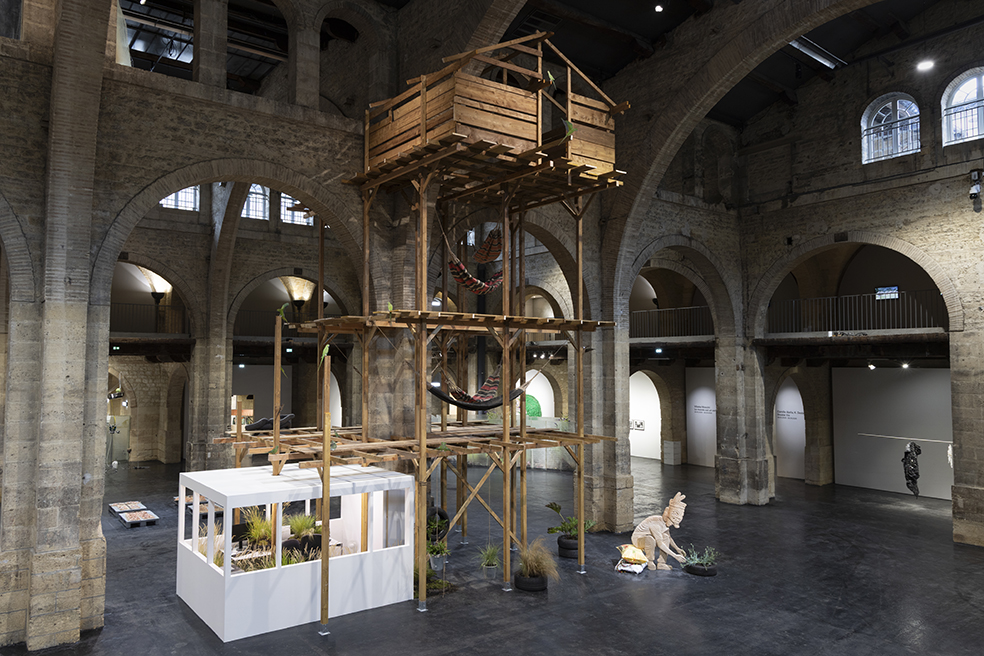
Daniel Otero Torres. Hamaca, 2025. Mixed media. 1050 × 785 × 700 cm © Daniel Otero Torres. CAPC Musée d’art contemporain de Bordeaux.
Once again, the CAPC Musée d’art Contemporain de Bordeaux, France, presents a daring and invigorating exhibition that refreshes the languid landscape of large-scale museum group shows, casting a luminous beam across it. We encounter a rhizomatic exhibition structured around the question Comment vivre dans le monde? (How to live in the world?), articulated from the perspective of everyday life—that is, from the political and social dynamics of lived, ordinary experience.
In shaping urban life for citizens of a planet increasingly driven by globalization, mass culture, and ever more dystopian pre-established patterns, the need to revisit still-relevant classical readings becomes unavoidable. As an entry point into this inquiry, the exhibition draws on Michel de Certeau’s L’invention du quotidien (1980), itself the result of a prior study commissioned by the French Ministry of Culture in 19741. Alongside this foundational reference, other theoretical sources included in the documentation area are also invoked, such as Le parti pris des choses by Francis Ponge, Après le soleil by Jonas Eika, and Pedagogy of Autonomy by Paulo Freire.
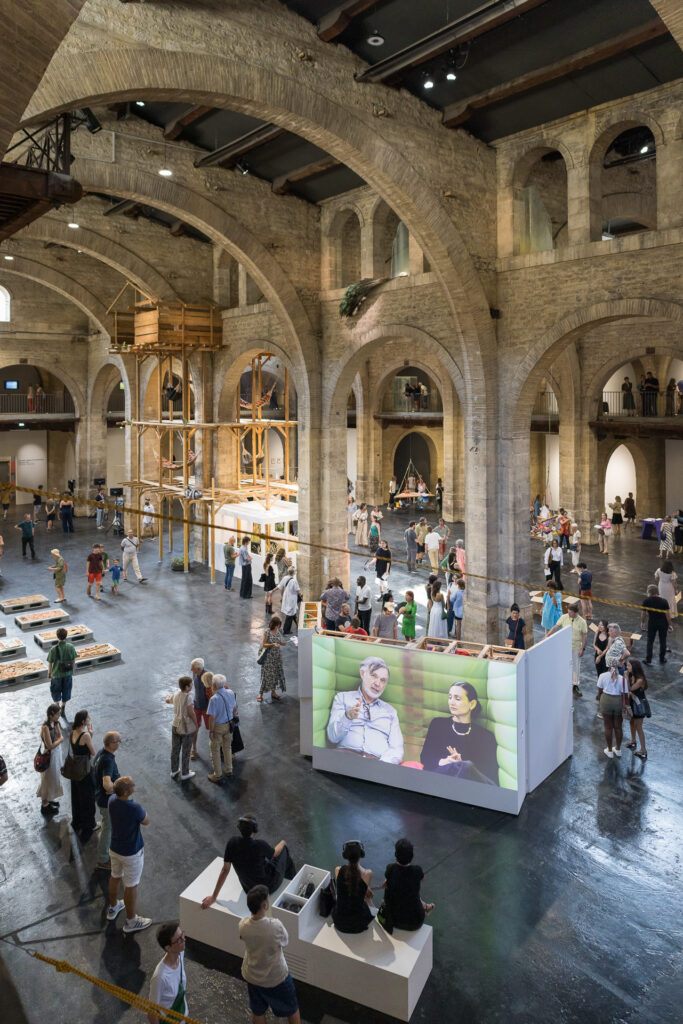
The Practice of Everyday Life. Photo: Arthur Pequin. Courtesy of the CAPC Musée d’Art Contemporain de Bordeaux.
Curator Sandra Patron, current director of the CAPC Musée d’art Contemporain, has focused on a selection of artists whose practices foreground explorations of survival tactics and forms of autonomy within contemporary art. This invitation to rethink reality is consistently grounded in an affirmative and hopeful stance, conceived as an antidote to fear and anxiety. Ultimately, the exhibition proposes autonomy understood as a form of positive resistance. Conceived from the local as its initial premise—the city of Bordeaux—the exhibition expands from the inside outward and back again, introducing kaleidoscopic perspectives by international artists from different generations who have explored the limits of the everyday.
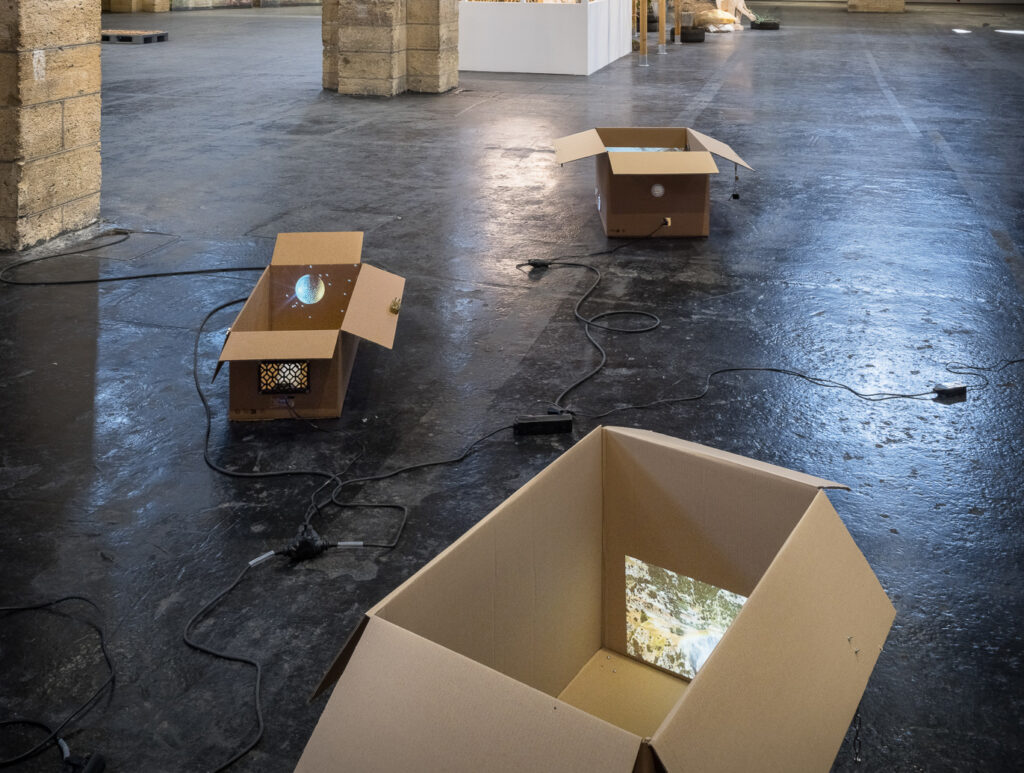
Gina Folly. Basic Needs, 2025. Image courtesy Arthur Pequin
The exhibition brings together the work of thirty artists from both East and West: Wilfrid Almendra, Francis Alÿs, Bibliomania (Alex Balgiu & Olivier Lebrun), Andrea Bowers, Pia Camil, Jennifer Caubet, Ruth Ewan, Cao Fei, Gina Folly, Birke Gorm, Shilpa Gupta, Ane Hjort Guttu & Sveinung Unneland, Oliver Hardt, Adelita Husni-Bey, Judith Kakon, Mierle Laderman Ukeles, Klara Lidén, Maider López, Enzo Mari, Jean-Luc Moulène, Yuko Mohri, Moffat Takadiwa, Daniel Otero Torres, Anri Sala, Marinella Senatore, Ettore Sottsass, Tenant of Culture, and Naama Tsabar. As can be observed, emerging voices are presented alongside established figures such as Francis Alÿs and Shilpa Gupta, as well as Enzo Mari—one of the leading figures of twentieth-century Italian design—Jean-Luc Moulène, to whom the Centre Pompidou dedicated a retrospective in 2016–2017, Andrea Bowers, known for her social activism, and Mierle Laderman Ukeles, a key figure in feminist art.
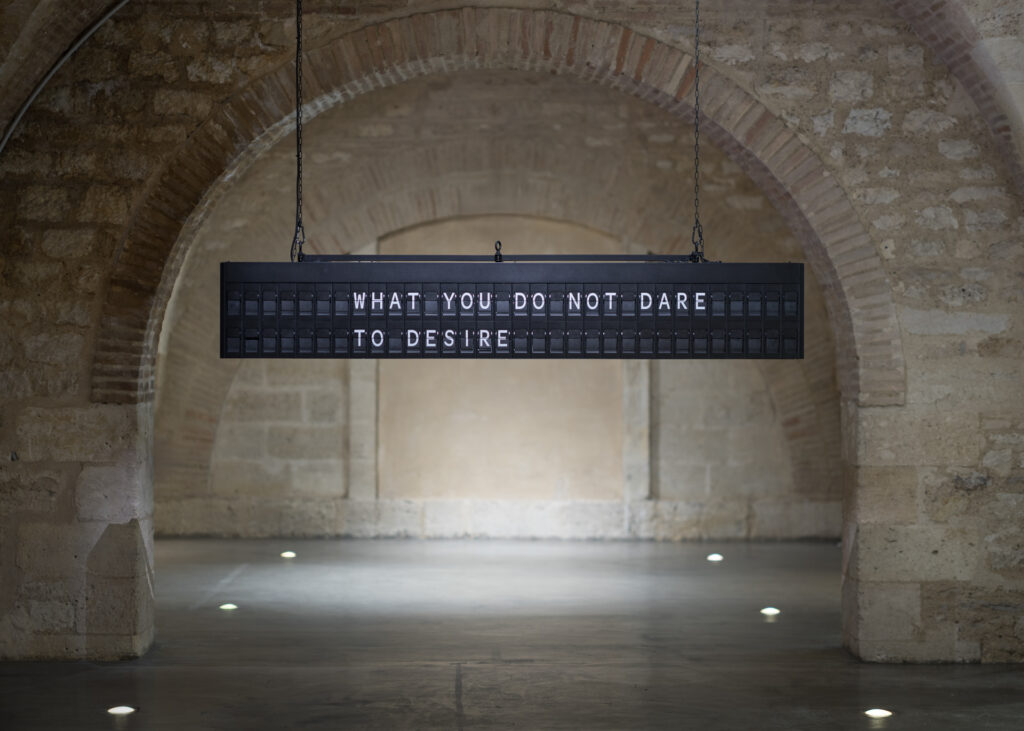
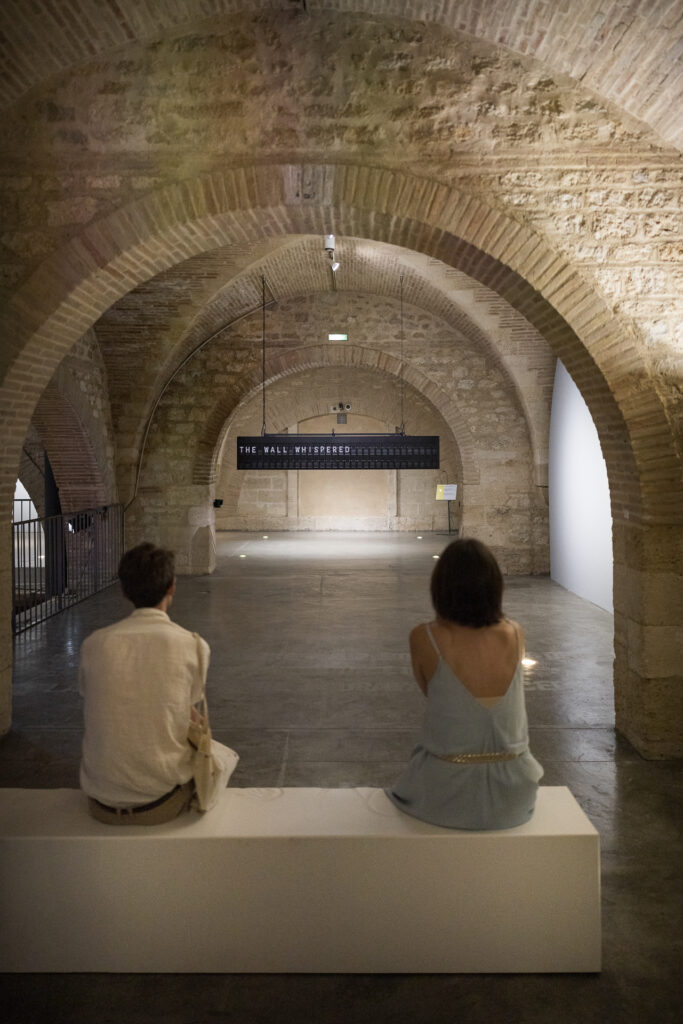
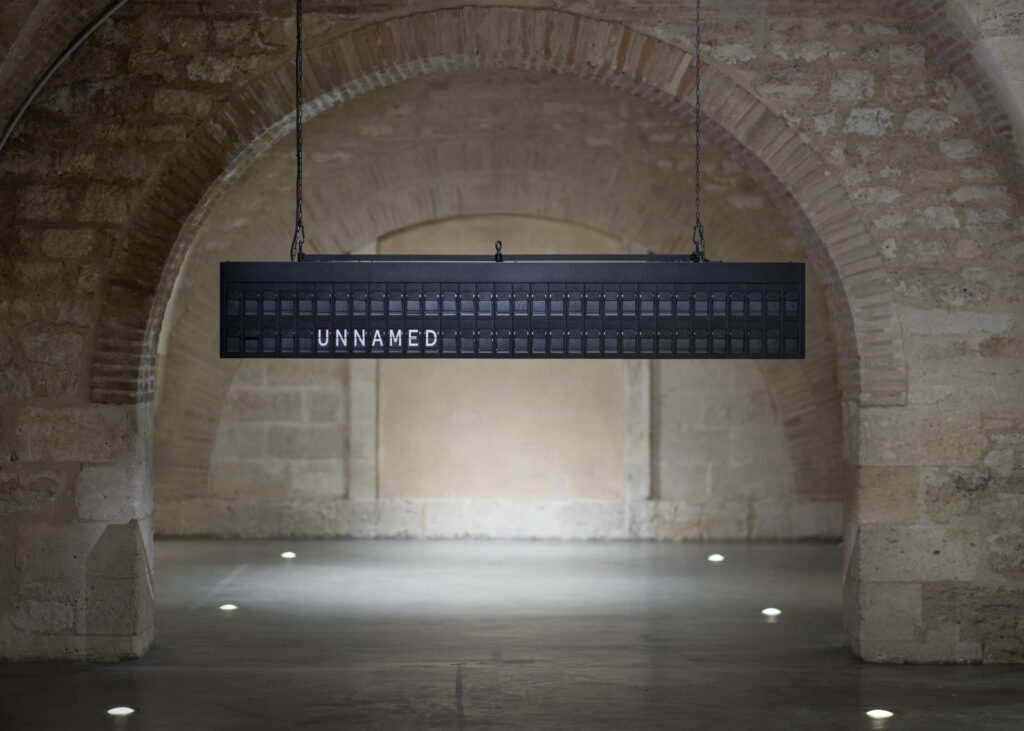
Gupta, Shilpa. Words Come from Ears. 2018, Motion flapboard 17x96x5 in; 43x244x13 cm, 15min loop. Image courtesy by Arthur Pequin
Among the sixty-five works presented in the central nave and on the first floor of the museum’s expansive space, the exhibition also includes five newly commissioned productions. One of these is the exhibition’s own publication, developed by the duo Bibliomania, composed of Alexandre Balgiu (poet-printer) and Olivier Lebrun (graphic designer). As expected, the commission was grounded in principles of reuse, collaboration, and the considered use of resources available within the local context.
From my experience and responsibility in the role of museum director, this approach is fundamental as an institutional and strategic positioning, as well as a way of conveying the need for rigor and for optimizing any inclusion of materials or actions based on kilometre-zero practices and so-called “local providers.”
In this regard, I would highlight the work of Swiss artist Judith Kakon, who, in her sculptural installation Recess and Incline, collaborated with the public lighting services of the city of Bordeaux. Her practice typically focuses on objects drawn from the everyday environment—linked to consumer society, commerce, and globalization—developing works through the reuse of consumer materials. At the same time, her work interrogates the transfer of elements from the public realm into the protected space of the museum’s “white cube.”
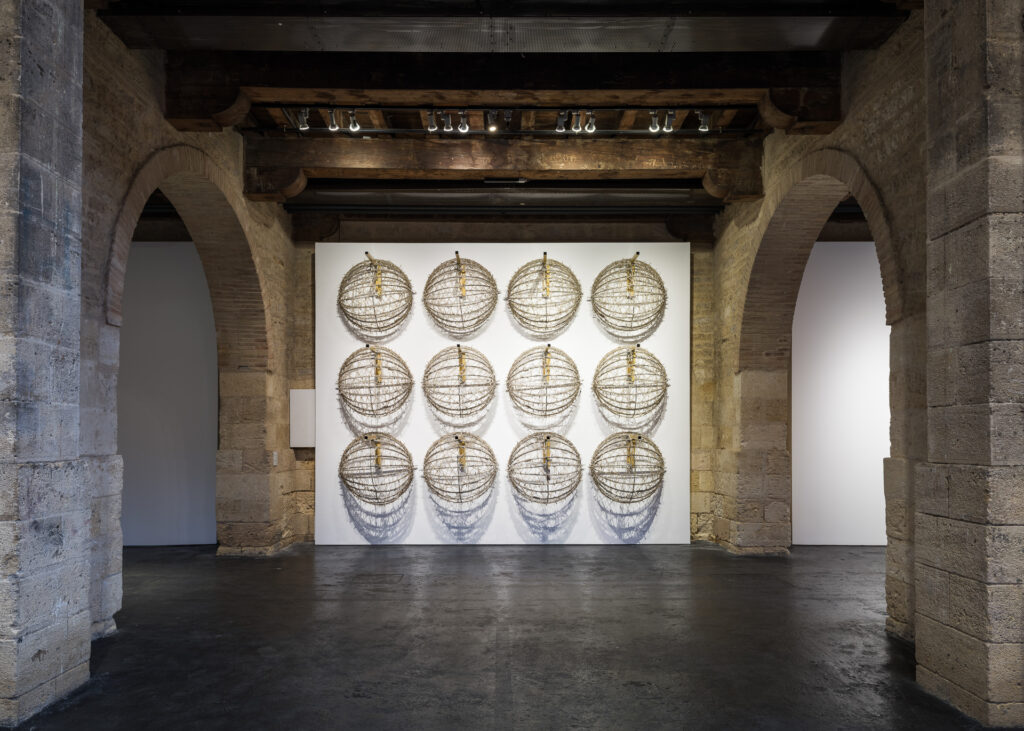
Judith Kakon, Recess and Incline, 2025. Image courtesy by Arthur Pequin
The work of Yuko Mohri, already recognized as a revelation at the most recent Venice Biennale, is characterized by a language that is immediately identifiable through sound installations and the use of sculptural ready-mades. Her works configure autonomous ecosystems with the appearance of kinetic sculptures, proposing new ways of understanding encounters between objects and the invisible energies that permeate the real world—magnetism, gravity, wind, and light. The veteran artist Mierle Laderman Ukeles, for her part, incorporates simple gestures as works of art. In 1969, she wrote the Manifesto for Maintenance Art, a direct challenge to the opposition between art and life, nature and culture, as well as between public and private spheres. Her concerns also extend to feminist struggles and to the implementation of professional best practices in response to the precarization of artistic labor.
Also noteworthy are the works of Cao Fei, which explore the relationship between reality, collective utopia, and the aspirations of younger Chinese generations shaped by economic boom and technological globalization; and those of Gina Folly, whose practice confronts the public and private lives of individuals in contexts of manipulation. The collective Tenant of Culture analyzes the methods of production, circulation, and distribution within the fashion industry, exposing issues related not only to pollution but also to social relations and excessive consumption. Their works stand as symbols of destruction and transformation. Klara Lidén incorporates elements from the urban environment, subjecting them to what she terms “deconstruction,” exploring the physical and psychological boundaries of the spaces through which human bodies move between public and private realms. Shilpa Gupta’s neon installation Words Come from Ears (2018) exemplifies her interactive installations and performances, creating environments that point to de facto powers and the social structures that generate psychological borders. Adelita Husni-Bey, whose practice centers on self-managed collectives, develops workshops, publications, and radio broadcasts based on non-competitive pedagogical models, integrating activists, architects, urban planners, athletes, and educational agents as active participants, thus opening new perspectives.
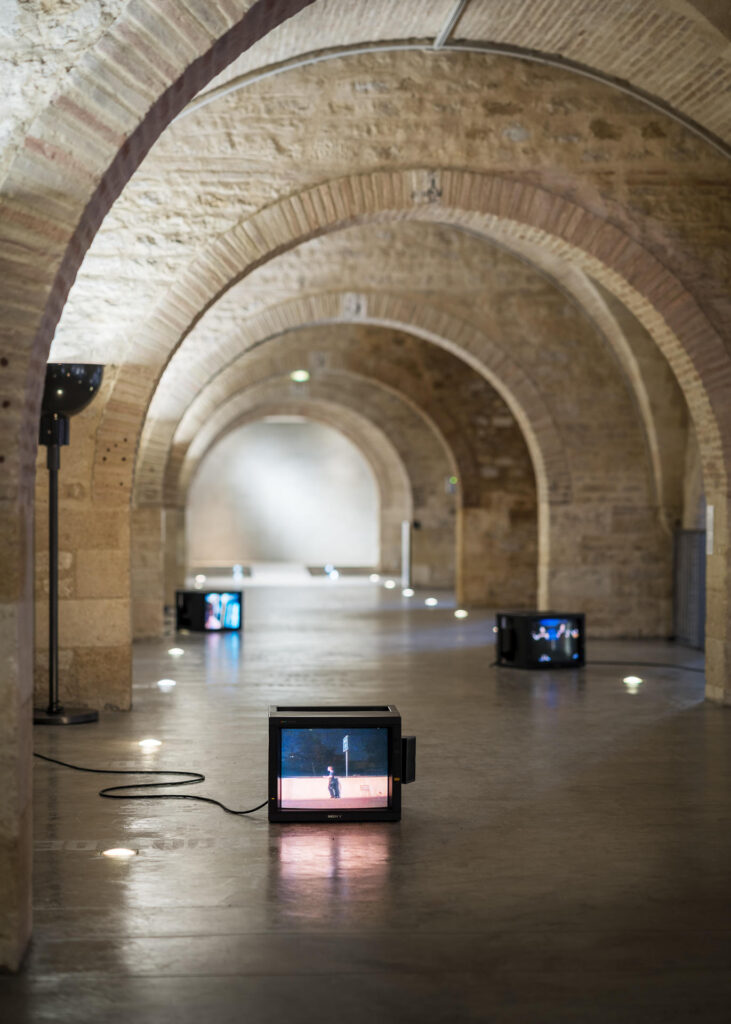
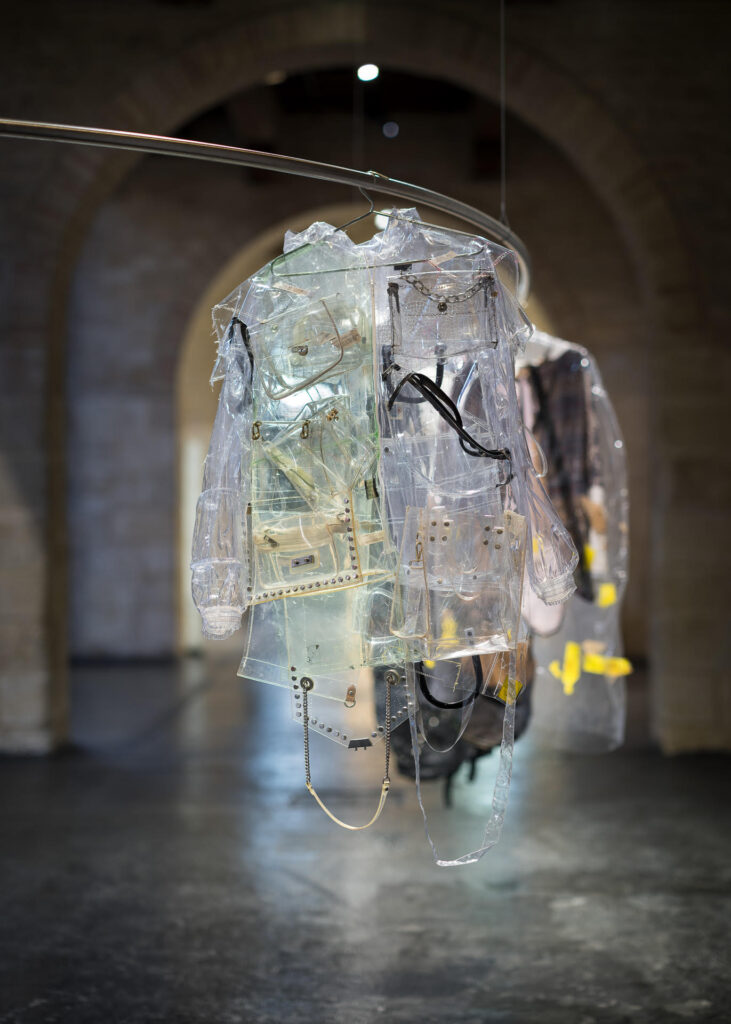
Left, Klara Lindén. Paralyzed. 2003. Image courtesy of Arthur Pequin. Right, Tenant of Culture (Hendrickje Schimmel).Image courtesy of Arthur Pequin
The exhibition opens channels and networks both conceptually and formally. Its form adapts to the skin of the building, integrating multiple layers of visual reading through the superimposition of installations that are amplified by the architecture of the CAPC itself. Within this context, Daniel Otero Torres’s intervention Hamaca appears as a cabin suspended ten meters above the ground, integrating temporalities and traditions inspired by Colombian stilt houses built over water. One can observe how certain installations on the first floor dialogue with those on the ground floor, generating a mirrored and integrative effect between the works. Interested in images associated with notions of resistance and revolution including those linked to demonstrations, celebrations, or reconciliation as engines of social change the artist also addresses the harmful effects of capitalism on biodiversity and on Indigenous communities at risk, as already indicated in his work Lluvia, presented in the exhibition An Ocean in Every Drop at the Jameel Arts Centre in Dubai in 2023.
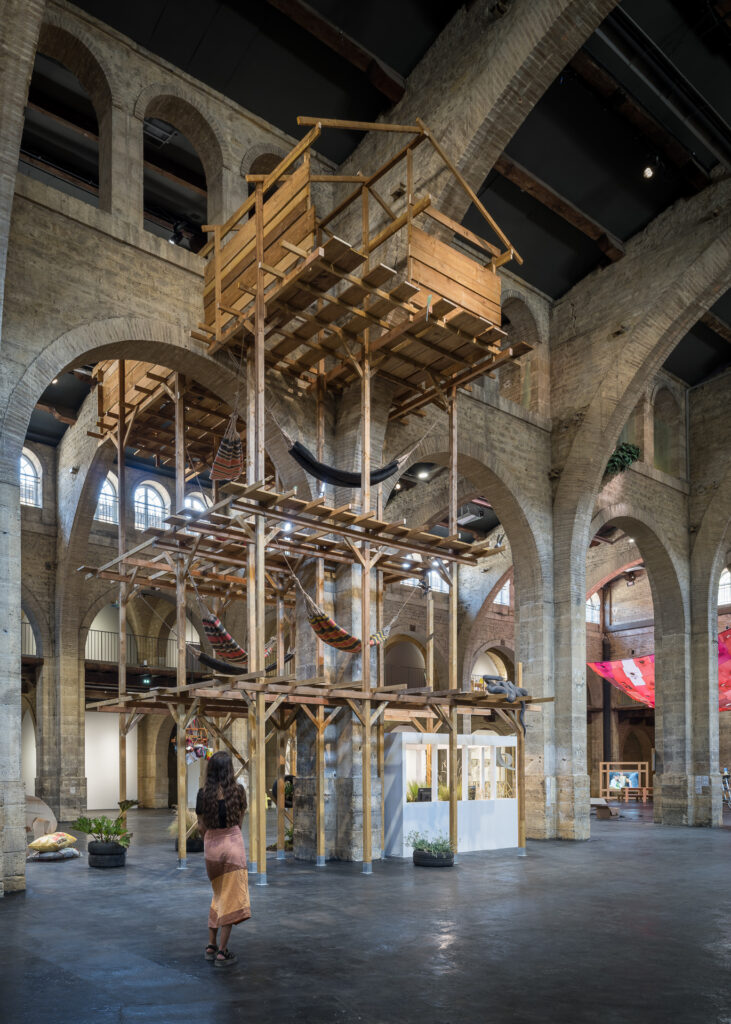
Otero Torres, Daniel. Hamaca, 2025. Mixed media. 1050 × 785 × 700 cm. Courtesy of the artist. Image courtesy by Arthur Pequin.
Given the breadth of the exhibition, it is essential to make special mention of the work of Wilfrid Almendra, an artist of Portuguese origin based in Marseille. His practice intertwines references to art history and architecture through the sublimation of precarious materials, the transition from iron to galvanized steel, and the incorporation of natural elements such as plants, articulating a complex decoding rooted in alternative economic forms. A recent example is his sculptural work In Between, through which he proposes new modes of production and new ways of inhabiting the contemporary world.
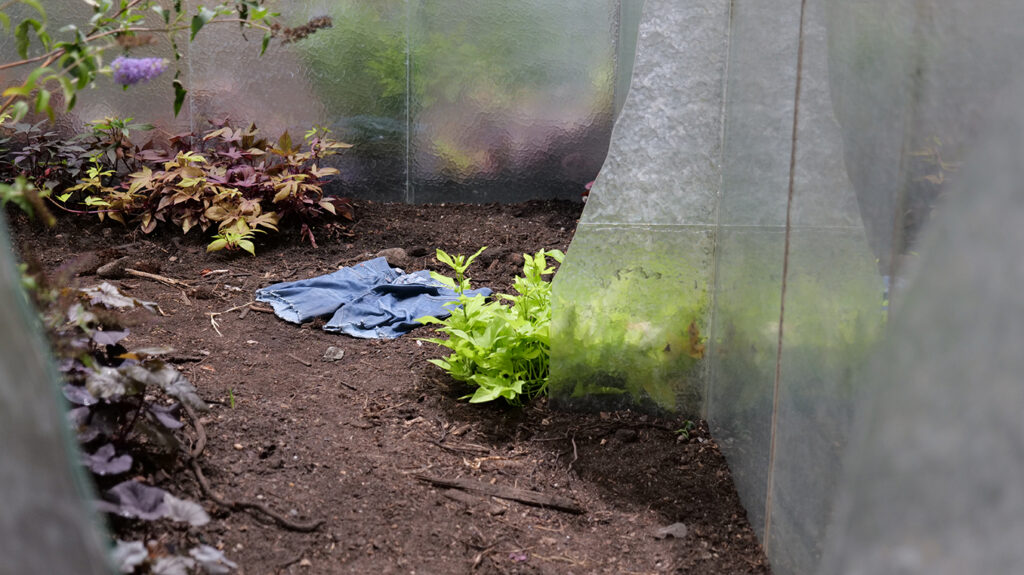
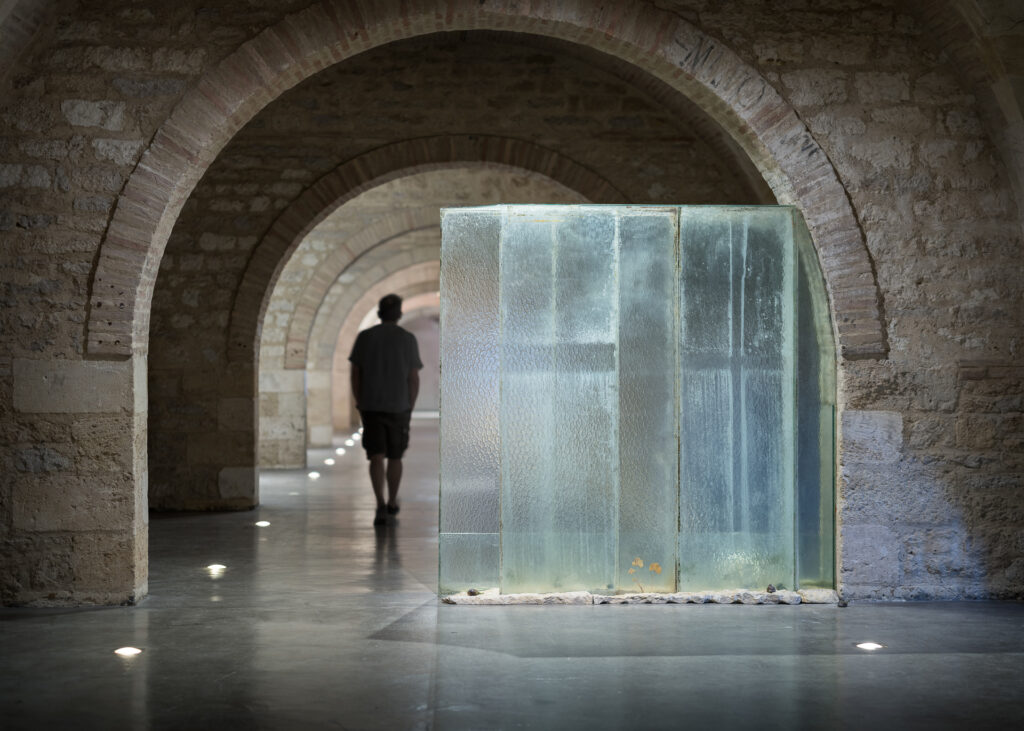
Almendra Wilfrid. Left. Clandestines, 2025. Vidrio catedral, planta, arbusto de las mariposas, tierra, silicona y aluminio fundido pintado. 810 × 220 × 323 cm. Cortesía del artista y Ceysson & Bénétière. Right. In Between. 2025. Image courtesy by Arthur Pequin.
Taken as a whole, and beyond these multiple creative connections in network form, the center becomes what has been termed a ZAD (Zone d’aménagement différé), understood as a living space to be defended, while forms of tactical urbanism are explored from the outside. Concepts such as Brave Space are also introduced, translated here as “empowerment space” as an alternative notion to both dominant public spaces and so-called safe spaces2. This networked idea, composed of coordinated gestures of militancy that traverse the exhibition, extends as well into methodologies of mediation and collaboration with various Bordeaux institutions, such as the School of Fine Arts and the Opéra National. With the latter, for example, a closing performance was scheduled as an echo of the works on view during January.
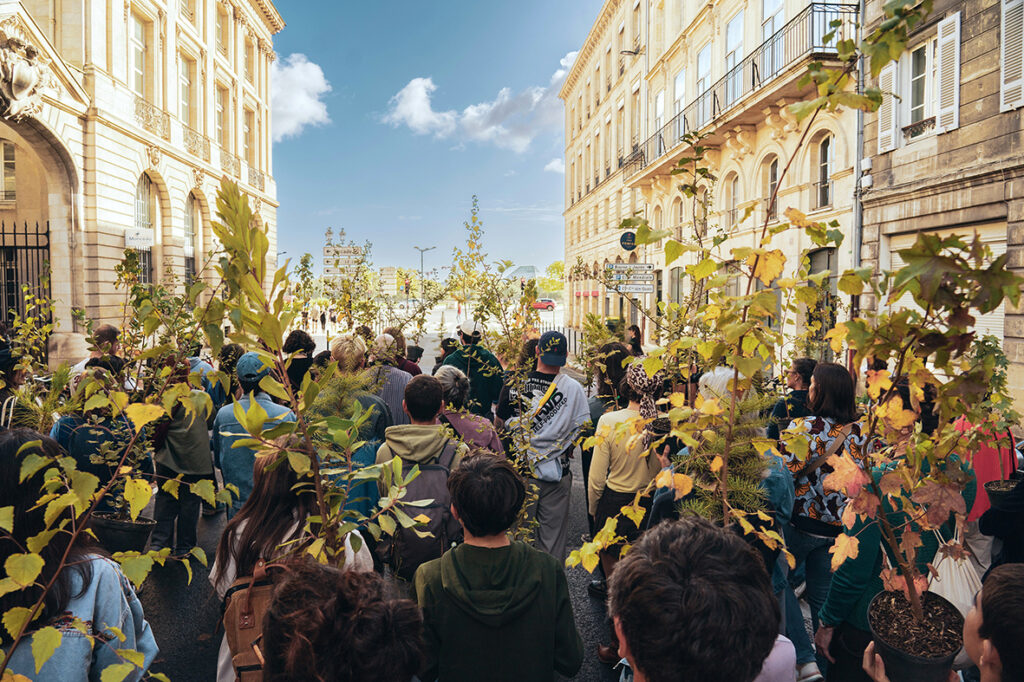
Maider López. Moving Forest. 2025. Participatory action / public space performance. Courtesy of the artist. CAPC Musée d’art contemporain de Bordeaux. Photo: Pierre Planchenault.
Finally, particular attention must be given to Moving Forest, an action by Maider López, a Basque artist with a broad international trajectory. The action, consistent with her ongoing work around activating human groups in diverse contexts, took place on October 5. During the event, 250 people walked in coordinated formation, each carrying one of nine selected native tree species birches, firs, cork oaks, sweet gums, strawberry trees, apple trees, pear trees, pines, and oaks, creating a participatory forest in motion as they moved through the city. This project extends beyond the day of the action itself, as the trees will continue to grow in the gardens and homes of the participating carriers.
- Within this analytical framework, everyday life is understood through Michel de Certeau’s definition, which conceives it as what is given to us and shared daily, what presses upon and even constrains us under the “tyranny of the present,” forming an intimate, partially veiled history situated midway between individual experience and the collective. — Michel de Certeau, The Practice of Everyday Life, 1984 (orig. 1980). ↩︎
- See Adrienne Maree Brown’s lecture, in which she emphasizes the difficulty—if not the impossibility—of any space being entirely safe, advocating instead for vulnerability, playfulness, and honesty as key conditions for the creation of critical collective spaces. Adrienne Maree Brown, On Vulnerability, Playfulness and Keeping Yourself Honest, lecture, Vimeo, 2020. https://vimeo.com/474744892 ↩︎