By Daniel Santiago Salguero
2026 / 02 / 16
What can one expect when one is contemporary with and compatriot of figures like Diomedes Díaz or Pablo Escobar, who influenced national culture so deeply and who, in many cases, are still celebrated and/or part of a current way of seeing life, especially from within popular culture.
I relate this idea to having grown up watching “schizophrenic” or “psychotic” cinema by Woody Allen, which ultimately — one might perhaps say (that’s where I’m going) — is auteur cinema that channels the madness that were precisely the 80s and 90s of Western culture; it gives shape to that unbalanced dementia and, at the same time, that peak-of-a-culture intensity, from delirium and in a kind of excess as well (Woody premiered one film per year for decades, directed and starring in and written by him most of the time): a cinema not of special effects but of questioning and playful elements, full of depth from the simple and the universal, and of explicit darkness too, of humor; and I would say that there, in the mixture of those elements, lies his brilliance and sophistication. One has to be up to date with the culture of his time and with cinema to truly value the splendor to which he took his own language (and later perhaps its decline, once it became so commercial?). For me, his peak was in conceptual rather than spectacular films. To make great cinema with a low budget and without effects, and for it to also be very sophisticated, is something of high culture, and it is exceptional. It is also something very New York: to speak within a sophisticated system to speak to everyone, not from below but from above… (has that been lost in the urgencies of the democratization of media and information? both positively and negatively…).
I have spent years saying nothing about Woody, unable to take a position in relation to that scandal of abuse involving his adopted daughter with Mia Farrow (I confess I don’t know much about the case) (impermissible when seen from morality, even non-religious morality), from any point of view. Woody, who like Almodóvar are my parents (meaning it affects me) (I say “parents” because I also grew up watching Almodóvar’s films, in a home with an absent father…), this being almost normalized within the culture of silence, let’s say at least in the Americas (I mean sexual abuse), but he, because he was a star of his century, became an example-case of how far the irrational perversity of man can go (in this case, of the man-man).
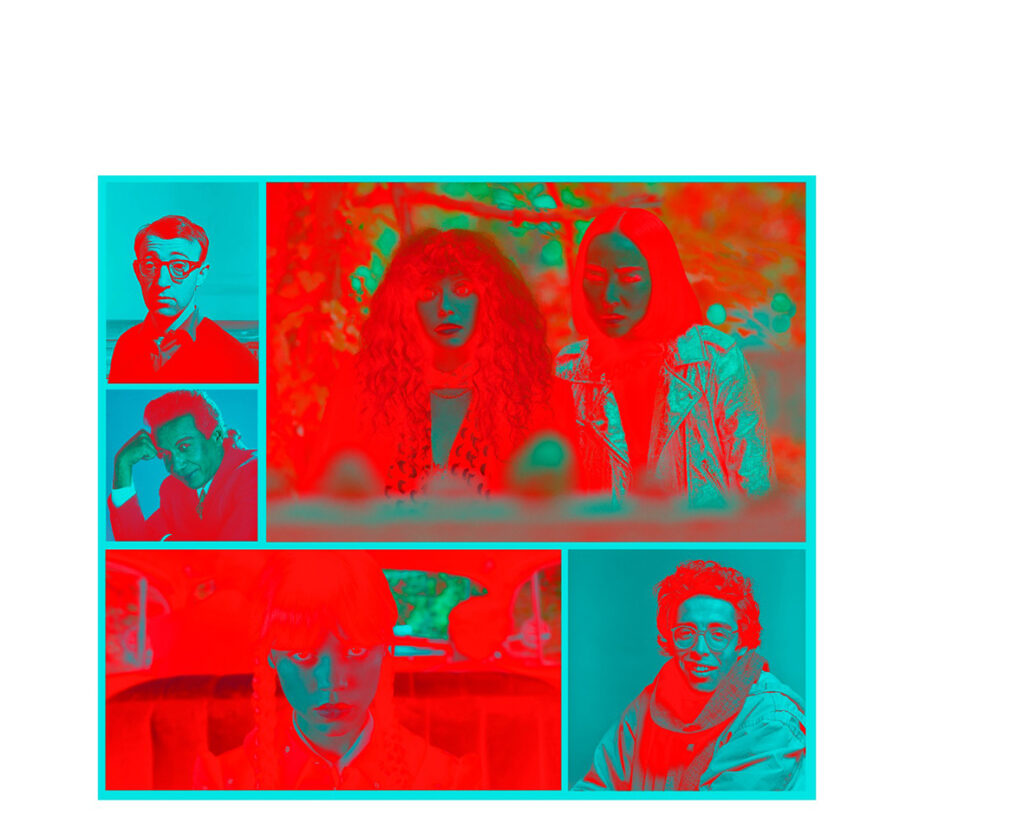
Compared to Diomedes Díaz or Pablo Escobar, his abuse case might not represent much, grave as it may have been. I have been thinking a lot about his cinema as a catalyst of a hypocritical, macho, white-supremacist, capitalist culture, absolutely suffocating, flattening, and destructive (could this apply as a way to understand DD and PE?), and Jewish in context (in New York, a majority; and Woody is explicitly Jewish in his cinema; he does not seem practicing, or very practicing, religiously, but culturally yes).
And somehow, after years of thinking things through, I feel that I finally have a position regarding his cinema (I did not speak of it all these years because of the scandal, and almost of his cancellation…), the cinema with which I grew up and educated and formed myself (it’s a shame: nobody talks about or knows the mega-genius cinema of Woody Allen anymore). Although I believe he has continued making films, I lost track after… The Flower of blah blah or Midnight in Paris. During my New York years, I heard from friends who saw him playing jazz that he has — or at least had then (2017) — his own band; brilliant, Woody.
I had been thinking this for days, but it was watching the series Russian Doll last month that I was able to crystallize the idea: we need more schizophrenic characters in the Woody mode (catalysts of unlivable cultures), not like Woody who go on to “cause harm” in their personal worlds (not that WA), but like the director-actor-screenwriter-musician he is (was?), and like the protagonist of this series, Nadia Vulvokov (played by the series’ co-creator, writer and director Natasha Lyonne), in the plot a descendant of Eastern European immigrants in contemporary New York who smokes nonstop and who, with her raspy voice, interrogates and dialogues with all the characters in the show. We need non-normal people! people who rage against injustice and who fight tooth and nail for their obsessions, and who perhaps proportionally mess things up at that same level? with obsessions (that are visible, not perversions) (precisely?). And in the middle of all this I think that, above all, I value obsessions that are at times perhaps grotesque but harmless (smoking, cursing, leaving without saying goodbye, being authentic even if politically incorrect, talking too much sometimes, or not talking, or bursting into laughter or tears, being alive basically, to differentiate oneself from the dead and from the living dead).
But it was really watching Wednesday (season two), sequel to my beloved childhood saga The Addams Family, that made me think about how healthy this character is (for the world), executive-produced by Tim Burton and with the first episodes directed by him as well; and you can tell there are screenwriters who are updated and critical regarding contemporary culture, feminisms that are not outdated but creative and disruptive, and for men too (Homer, or Gomez, as he is called in English — is the sweetest and most understanding in the family, without abandoning his masculine role as father Addams).
More than this specific character, Wednesday, I want to defend — or at least point to and reflect on — this type of personality (within which I include myself?), difficult, yes, but catalytic precisely of so much precarity and hypocrisy through wit and sincerity (and eccentricity?), somewhat under the politics of “let it hurt whoever it hurts” (I in no way justify Allen in his abuse or abuses; I say this understanding his masculine precariousness in a time still poor in which abuse was normalized, not only of daughters but of everything), including or especially of oneself. This paradigm remains in force for many (men? not only), perhaps for the majority, and it is in that context that characters like Russian Doll or Wednesday acquire so, so, so much value.
Diomedes — what a party! The paradigm of the party that never ends at whatever cost. Nineties Colombian-ness in its splendor, and he the king. Now we are paying the bill. Undeniably a genius; his lyricism, music, and force are incomparable. One I did not mention, but who also understood and expressed himself through media with brilliance, humor, sensitivity, and overexposure, without harming others (only himself, exposing himself the way he did), was the journalist, humorist, and politician Jaime Garzón. Someone better to remember than Pablo (also a politician) or Diomedes, in the absence of “fathers” of the nation, or in the presence of mega-toxic fathers (worse).
With Pablo, violence slipped out of his hands and erased him in a very decadent way. Not long ago I came to think that the only possible justification for the force with which he caused so much harm might have been the idea of breaking with Colombia’s rancid colonial order, often, or mostly rotten and tied to power for centuries. But it was not so, I would say neither in intention nor in results (how foolish of me to try to find a heroic side to a crazy, psychopathic, megalomaniac man empowered).
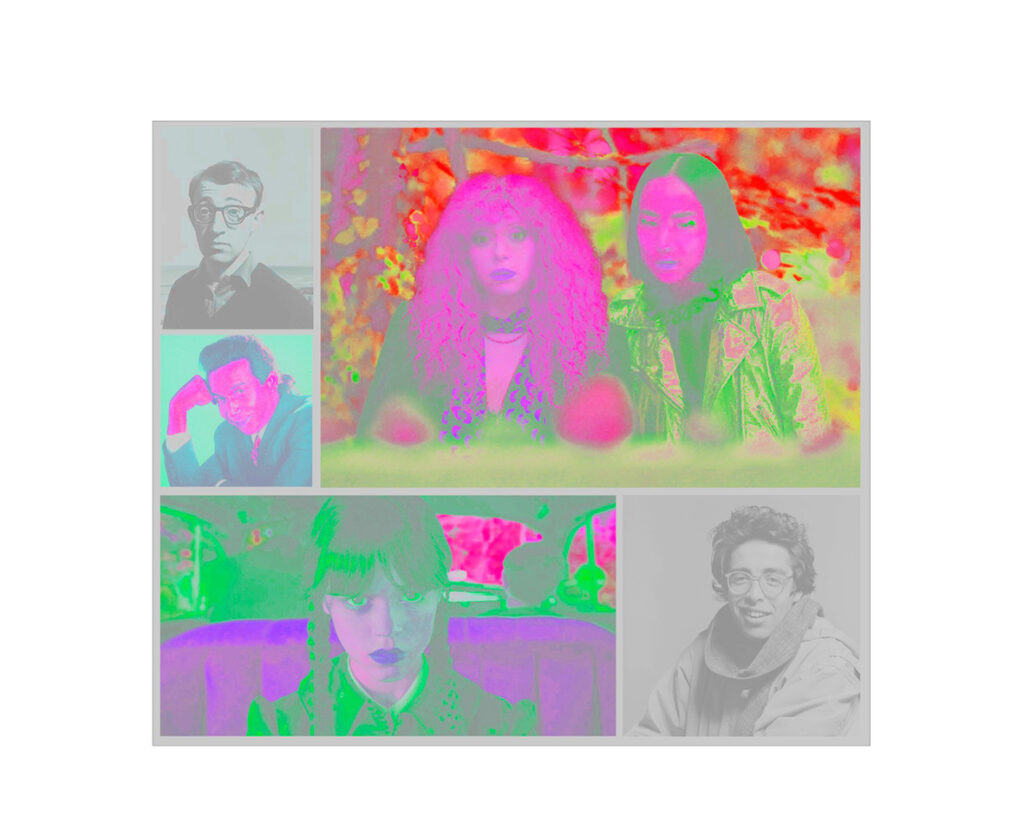
About the end of Diomedes, I do not know much, beyond much lower scandal and his passion for cocaine. A standard-bearer of coastal folklore that travels all the way to the Amazon, whether we like it or not, and possibly of popular Latin American identity in general, speaking of continental and global dominant cultures, etc., mainly through media, but what about politics…?
I asked an AI for curious facts about Diomedes and it says: nicknamed “El Cacique de La Junta’ by Rafael Orozco. He is the top record seller in the history of vallenato; he won a Latin Grammy and recorded albums both under house arrest and in the Valledupar prison. He had six children with the two great loves of his life, Consuelo Martínez “La Bogotana” and Betsy Liliana “La Cachaca,” including Moisés, whom he called “El Travieso.” The caravans for his album releases in Valledupar were so massive that civic days were declared so people could see their idol.
I do not want to go on much longer, but I just asked the AI for Pablo Escobar’s psychological profile and the answer is truly interesting, in case anyone wants to look it up.
—
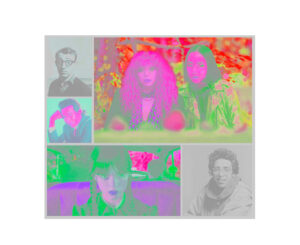
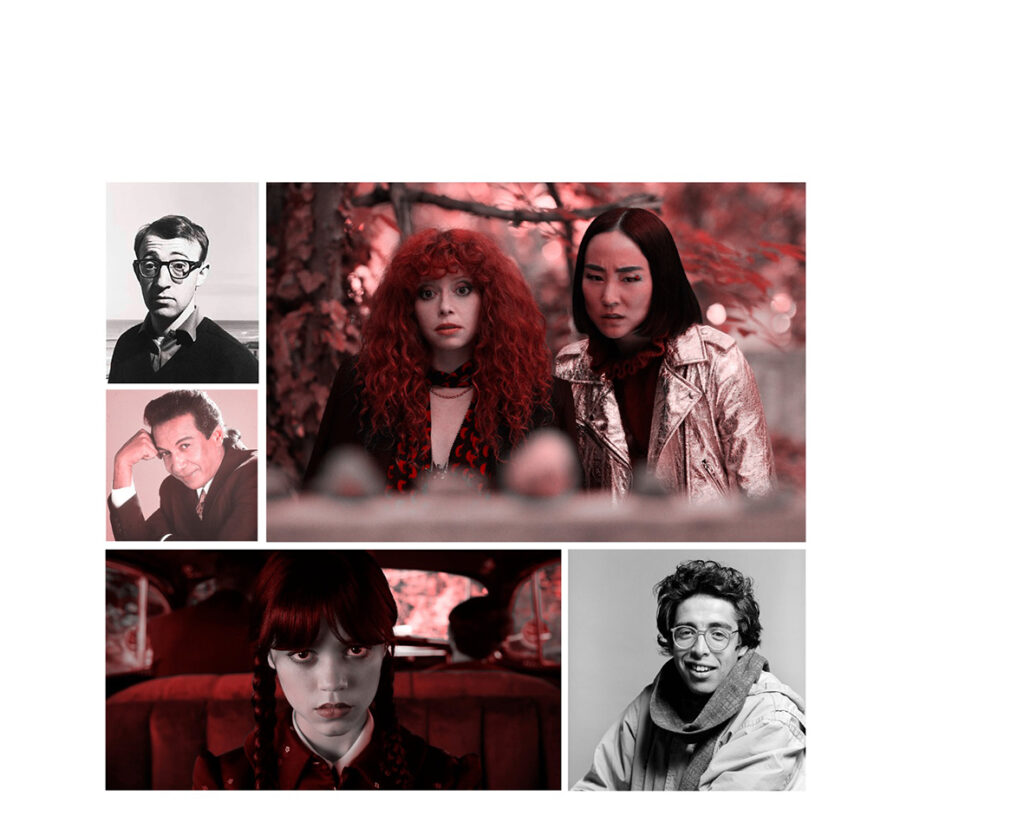
Digital illustrations by Daniel Santiago Salguero, based on the following photographic sources:
- Jenna Ortega: official still from the television series Wednesday, produced by MGM Television for Netflix. © MGM Television / Netflix.
- Natasha Lyonne and Greta Lee: promotional still from Season 2 of the Netflix series Russian Doll. © Netflix.
- Woody Allen: photographer unknown. Image originally published in Interview Magazine, available at: https://www.interviewmagazine.com/film/woody-allen-oscars-2012. © Interview Magazine and respective rights holders.
- Diomedes Díaz: photographer unknown. Promotional studio photograph taken for the album Título de Amor (1993), recorded with accordionist Juancho Ríos. © Respective rights holders.
- Jaime Garzón: photograph from the Hernán Díaz Collection, currently preserved by the Banco de la República Virtual Library (Colombia). © Banco de la República – Hernán Díaz Collection.
All referenced images remain the property of their respective copyright holders and are used for editorial and critical purposes.