Author: Nekane Aramburu
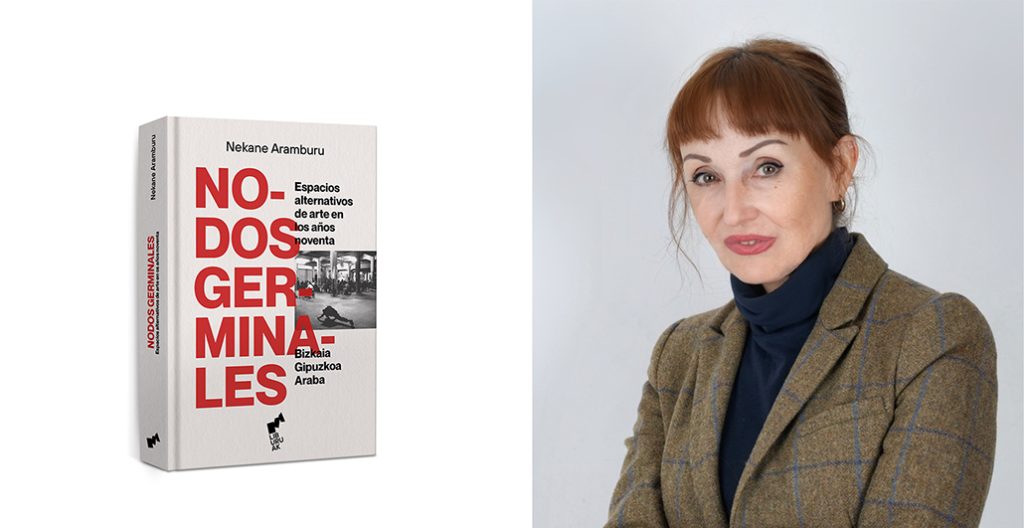
Germinal Nodes. Alternative Art Spaces in the 1990s ( Nodos germinales. Espacios alternativos de arte en los años noventa), the most recent investigation by Nekane Aramburu, published by Liburuak in 2025, stands as a fundamental work for rethinking the recent history of art from a decentered perspective. While the book documents the emergence of independent art spaces in the Basque Country during the 1990s—an undertaking already significant in itself—its true strength lies in the recovery of a set of memories, practices, and experiences that had remained scattered or barely legible within the institutional narrative. Many of these practices operated at a distance from the discursive frameworks of official art systems, which, now, from the vantage point of time, allows us to recognize the extent to which they were pioneering.
The case studies that emerged within the Basque context are paradigmatic, and the research offers a clear understanding of the deeper logic behind their articulation and their presence both within the Spanish context and across international networks of independent culture.
Aramburu reconstructs these trajectories not to situate them outside the system, but to demonstrate how they were, in fact, constitutive of it: how they expanded its limits, reformulated its methodologies, and activated new forms of relation between artistic creation, cultural management, and community. By reinserting these experiences into the historical narrative, the author produces a decisive epistemic shift: she recenters the gaze, questions hegemonic chronologies, and shows that the history of art in the region—and, by extension, the Spanish state cannot be understood without attending to these nodes where new forms of experimentation, mediation, and cultural thought were rehearsed.
The book thus proposes a living, critical, and situated historiography in which alternative spaces do not appear as appendices to the system but as essential agents in the transformation of contemporary visual culture. The methodologies employed by Aramburu are grounded in placing institutional and independent models side by side, allowing for a comparative analysis of their respective processes of evolution. Through this approach, she reconfigures the terrain from which art history has been traditionally understood, offering readers a renewed, plural, and complex map that is deeply revealing of the practices that redefined the 1990s.
Mapping an Ecosystem That Transformed a Decade
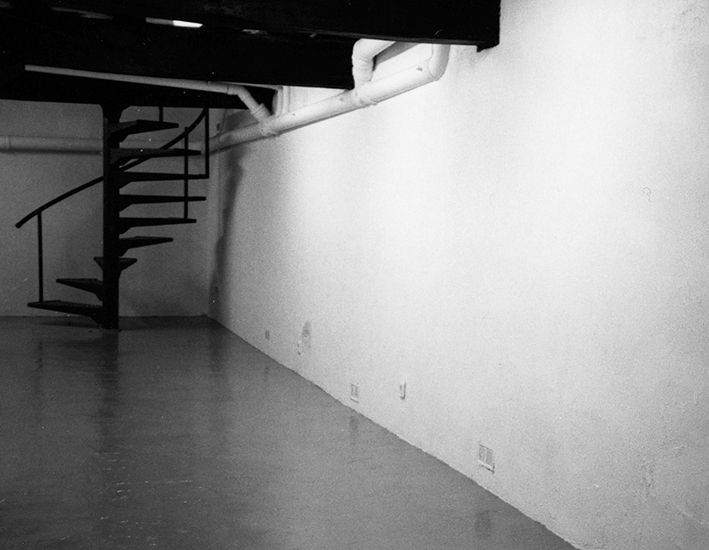
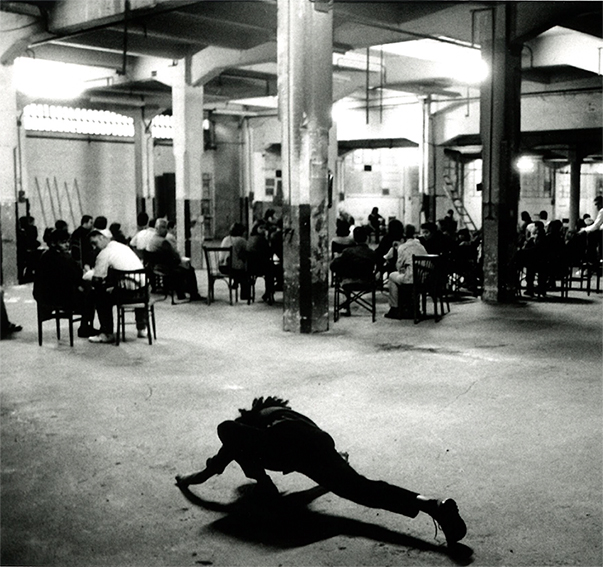
Aramburu frames the book through a set of questions that open a political reading of recent art history:
“What happened in the Basque Country during the 1990s for a network of self-managed spaces to germinate amid a convulsive and transformative sociopolitical landscape? How did young artists create their own mechanisms of visibility?” This dual inquiry articulates the core concept of the “germinal node”: spaces that not only hosted exhibitions but also operated as devices of thought, mediation, and social experimentation.
The author arrives at this book after a sustained trajectory of research on artist collectives and independent spaces, as well as on cultural policies, both within institutional frameworks and through the evolving role of museums and art centers. In publications such as History and Current Situation of Artist Collectives and Independent Spaces in Spain (1980–2010) and Alternatives: The Politics of Independence in the Visual Arts, Aramburu had already emphasized the need to construct other art histories—ones attentive to non-institutionalized practices and critical of the patriarchal and capitalist models that have shaped dominant narratives. Nodos Germinales extends and sharpens this project, focusing on the Basque region during a decisive moment of cultural transformation.
Memory, Archive, and Experimentation
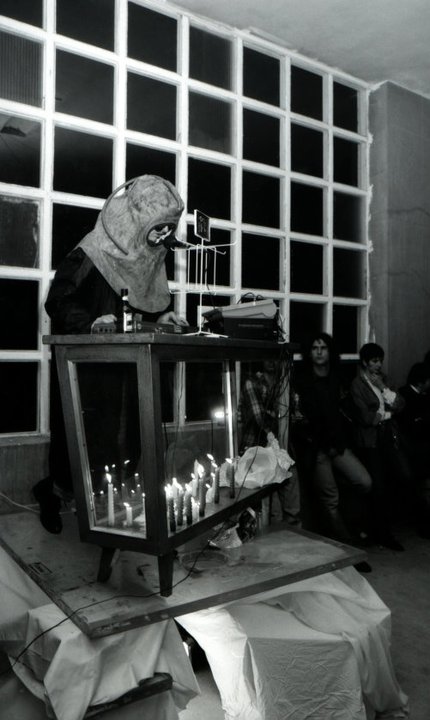
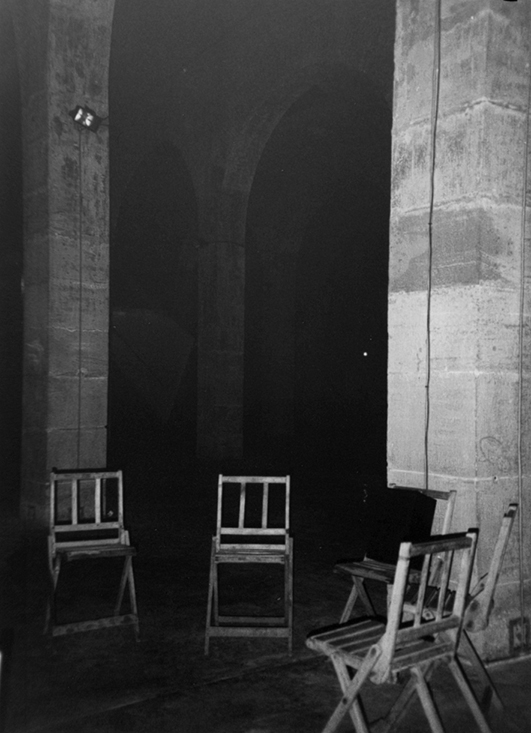
The book is grounded in the author’s doctoral dissertation, Espacios alternativos para las artes visuales durante la década de los 90 en el País Vasco, and dialogues with parallel research such as her essay on “proto-spaces,” where she notes that independent spaces began to gain resonance in the second half of the 1990s, though often through superficial media representations.
In contrast, Nodos germinales reconstructs with critical rigor the conditions that enabled their emergence. Aramburu maps fourteen foundational spaces. Among the first-generation models are Arte/Nativa (1986–1994), Safi Gallery (1988–1990), and Zapatari (1988–2000). Alongside them, eleven second-generation projects—Kultur bar, El Gallinero, Las Chamas, Trasforma, En Canal, Abisal, Consonni, Coop, Mina Espazio, Casa Ubú, and Sarea- expanded the terrain of cultural self-management.
Viewed together, these nodes reveal a network that reshaped the modes of production, circulation, and reception of contemporary art, transforming the cultural ecosystem quietly yet profoundly.
In a recent interview, Aramburu remarked that “the alternative art spaces of the 1990s helped change the relationship between art and society by converging with it.” This assertion runs throughout the book: the germinal nodes did not operate as isolated devices but as zones of interdependence among artists, communities, institutions, and territories. As such, they “challenged the limits of artistic institutionalization and opened new pathways for contemporary creation.”
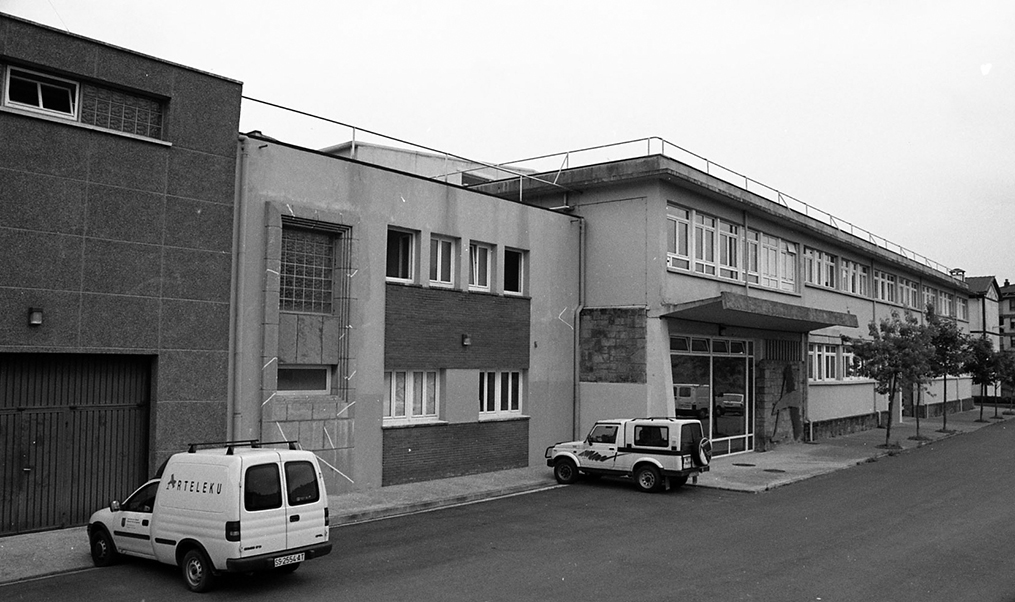
The spaces analyzed were pioneers in integrating mediation, workshops, courses, public actions, and direct engagement with specific social contexts. Issues now considered central, such as gender, environmental sustainability, new technologies, and relational practices, were incorporated long before major institutions adopted them.
One of the book’s key contributions lies in its attention to material and technological conditions: collectives that, due to their autonomy, incorporated the use of the internet early on, both in their daily operations and in their artistic experimentation. This pioneering approach enabled the emergence of new forms of visibility, transnational networks, and hybrid practices that now form an essential part of contemporary art.
In an interview with El País, Aramburu stated that “the arts have been in the hands of influencers and shadow technocrats,” referring to the concentration of legitimacy in a small group of agents. Her research responds to this diagnostic by recovering stories that were not peripheral but structurally essential and whose impact remains visible in contemporary practices that continue to prioritize self-management, experimentation, and community-building.
For readers interested in independent practices, cultural mediation, critical management, or art historiography, Nodos germinales is an indispensable tool. Its strength lies in its ability to reconstruct dispersed memory in order to reintegrate it into the broader narrative, producing a necessary decentering in how the 1990s—and their enduring legacy are understood.