By D. Dominick Lombardi
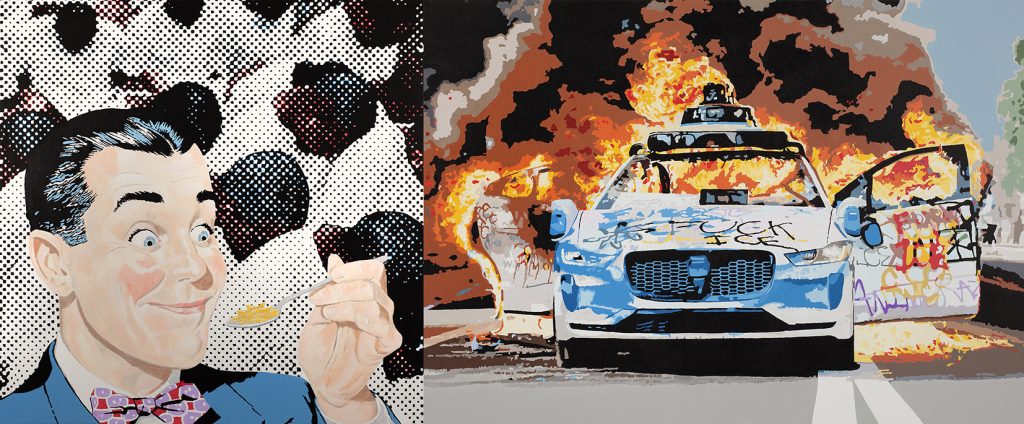
Jerry Kearns, Bite Size, 2025, acrylic on canvas, 48 × 116 inches.
The first painting that will draw your attention when entering Frosch & Co gallery is the eye-catching diptych Bite Size (2025). The left side of this two-part saga features a classic example of a 1950s adult male, complete with suit and tie, eating some mid-century dining breakthrough. This figure, who appears vacuous and harmless, is at the core of the artist’s message and concerns. The 1950s were the period when America was supposedly great in the minds of some of our contemporary politicians, when anyone who was different from the cisgender white female or male was not seen as acceptable or conventional in popular culture. The mid-twentieth century is also the time when ultra-processed food really started to take off, when artificial additives prompted less healthful eating habits solely to increase corporate profits. Today, ultra-processed foods are the most common type available in what are known as food deserts, where the poorest and most deprived live.
The backdrop of the mid-1950s male in Bite Size is the heavily pixilated image of the very unfortunate souls who have often been unlawfully rounded up by ICE and herded into overcrowded, inhumane detention centers. This is all part of our current administration’s attempt at returning us to some sort of eugenics-based reality akin to the Jim Crow era, when our country was supposedly great, at least according to the MAGA faithful. Conversely, on the right side of the diptych is some version of an ICE vehicle covered in graffiti and engulfed in flames. This represents the public outcry for justice based on the law of the land and the Constitution. Painted in a highly graphic style, Kearns shares both his revulsion, its source, and one result of the current state of affairs.
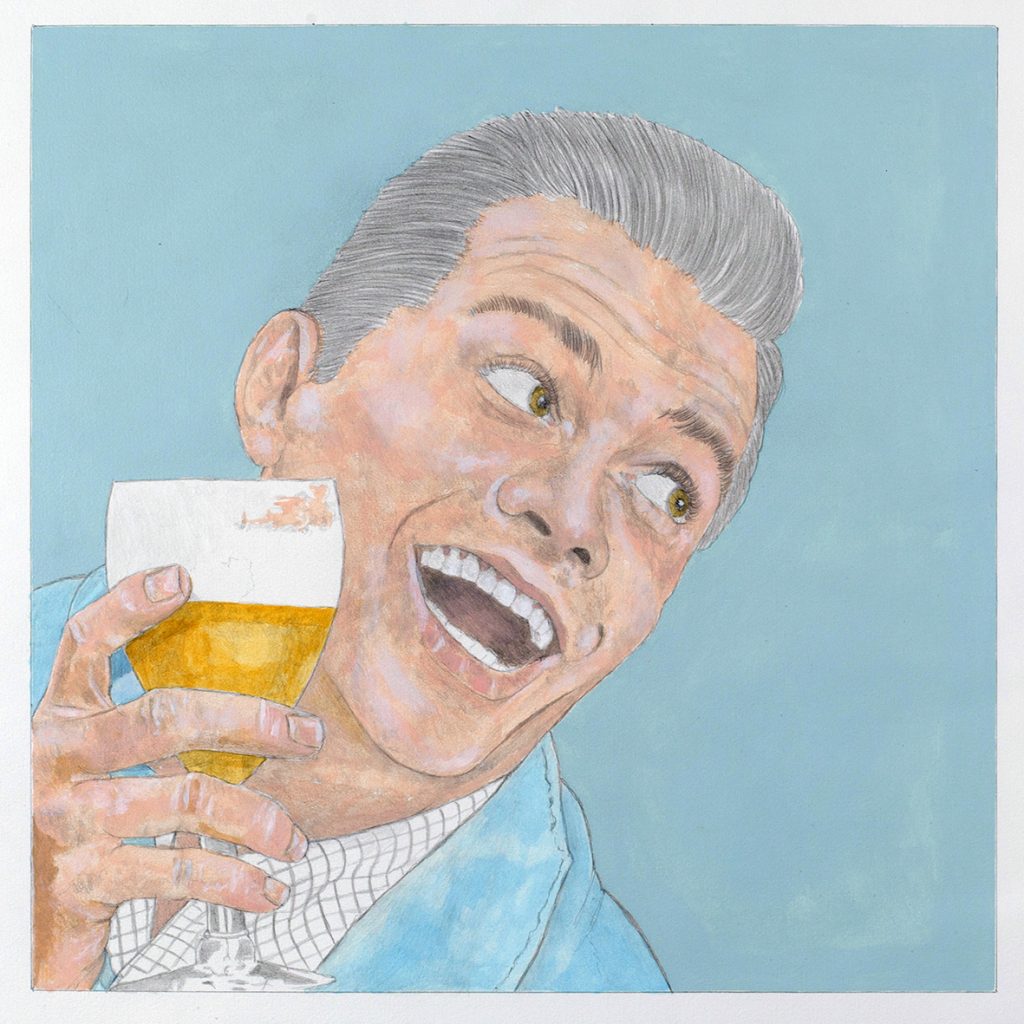
Jerry Kearns, Adam, 2026, acrylic and graphite on paper, 16 × 16 inches.
The next large diptych is RuPaul Y’all (2026), featuring the aforementioned star set against an ominous backdrop of KKK hooded figures tinted red. A stunning juxtaposition. In the background on the right is a depiction of an ICE arrest with the captor staring back at the viewer in scary, defiant, stone-cold silence. Placed over this is another 1950s vignette: a teary-eyed young girl upset about her torn paper doll chain. The contrast of imagery on both sides is stark, while the continued strength and perseverance of the famous drag queen and all the producing, acting, and hosting being done by this well-known personality gives us hope for a better, more inclusive future in spite of the hate.
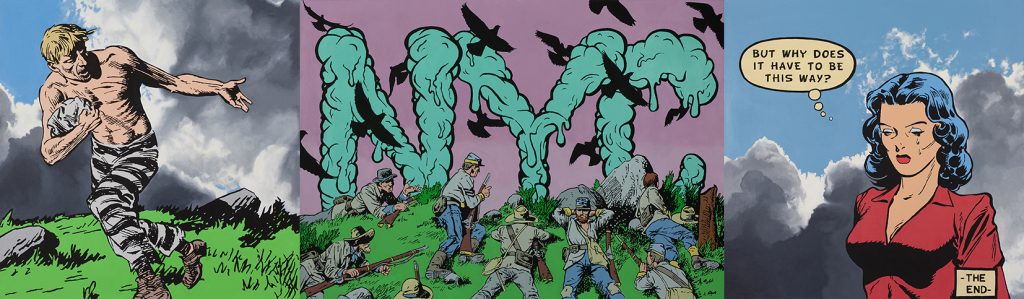
Jerry Kearns, Blackbird, 2025, acrylic on canvas, 48 × 164 inches.
The third large canvas, Blackbird (2025), is a triptych that focuses on a general concern regarding the tide of ‘Old South’ thinking as it continues to crop up today in unlikely places. In the center panel are a number of Confederate Civil War soldiers along a hillside with the letters NYC looming above. Within the letters are a number of haunting blackbirds, iconic images that are similar to the winged silhouettes in Van Gogh’s Wheatfield with Crows (1890), where impending doom, accentuated by the fluctuating perspective, chills the spine. On the left of Blackbird, we see what appears to be a prisoner escaping a chain gang as he looks back in hopes of outrunning his pursuers. On the right is a weeping woman thinking, “But why does it all have to be this way,” adding finality to the message. All three panels are done in a classic, ‘golden age of comic-book style’ that both clarifies and intensifies the message. The reality is that things were never perfect, especially if you were marginalized. But what we had before 2015 and that notorious descent on the golden escalator was leaps and bounds better than what we are witnessing, not just here but all over the globe.
Smaller works that run in various sections of the gallery have a more focused view on suggestive advertising with symbolic titles like Adam, Eve, Cain, and Abel. Adam (2026) portrays a young smiling man in a classic 1960s leisure suit holding a cold glass of beer – be happy, drink, don’t pay attention to segregation and oppression. Then there’s Eve (2026), who is oohing and ahhing a twist-off bottle of ketchup, like it’s the greatest thing since sliced bread. So grab those keys to happiness and simple pleasures with twist-off bottles and pop-top cans and forget about all that other messy stuff like women’s right to choose, equal pay for equal work, healthcare, and collateral damage.
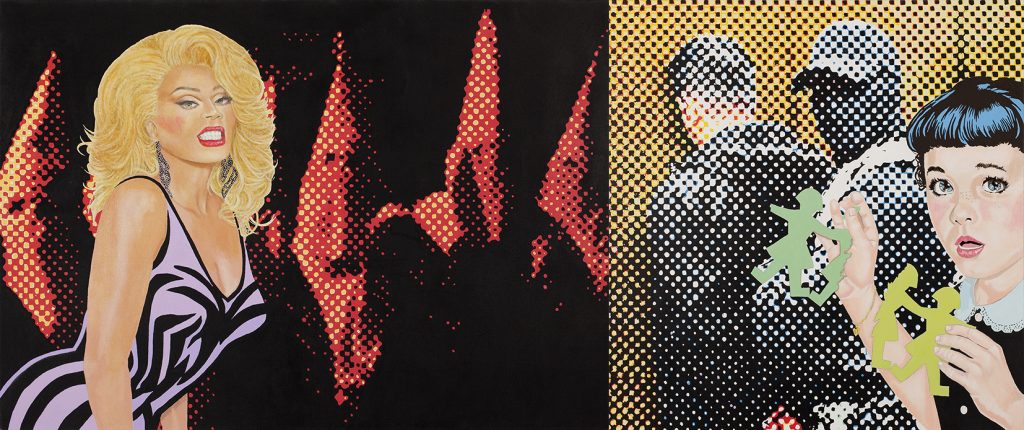
Jerry Kearns, RuPaul Y’all, 2026, acrylic on canvas, 48 × 116 inches.
Another small work titled Mary (2026) includes a Campbell’s tomato soup can, a nod to the Pop artist Andy Warhol, referencing Pop Art as one of the first movements to look at consumer consumption and a litany of social issues. What really struck me about Mary is the Stepford Wife look in her eyes and the way she holds the soup can with that blank stare and bright smile – single-minded, thought way inside the box.
“Jerry Kearns: Complicit” runs through May 31 at Frosch & Co. Don’t miss it.