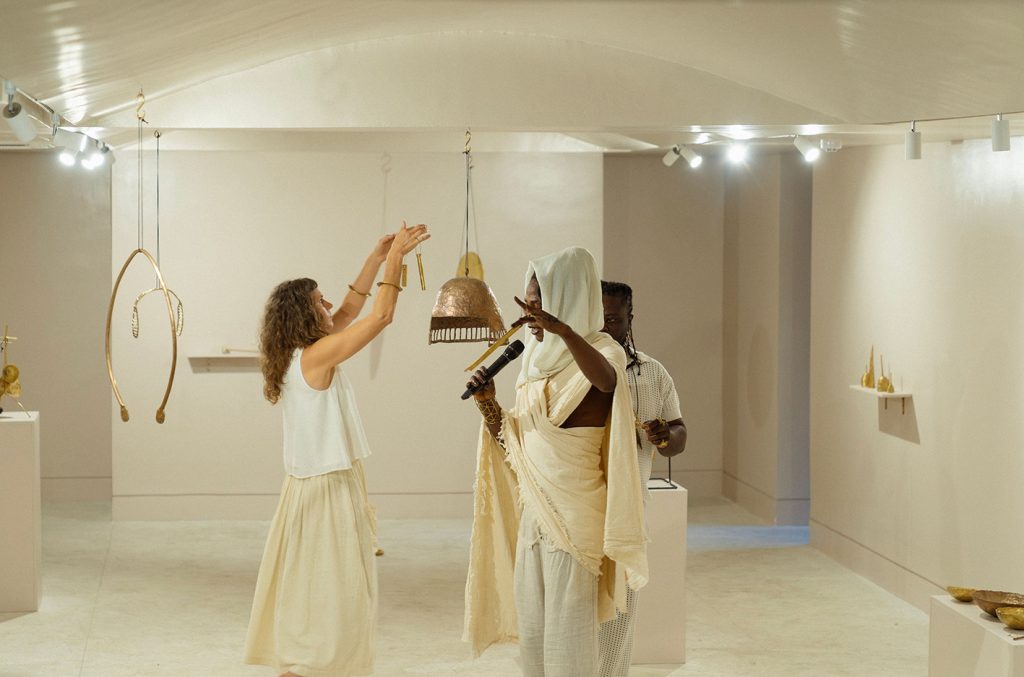
By Yohanna M. Roa
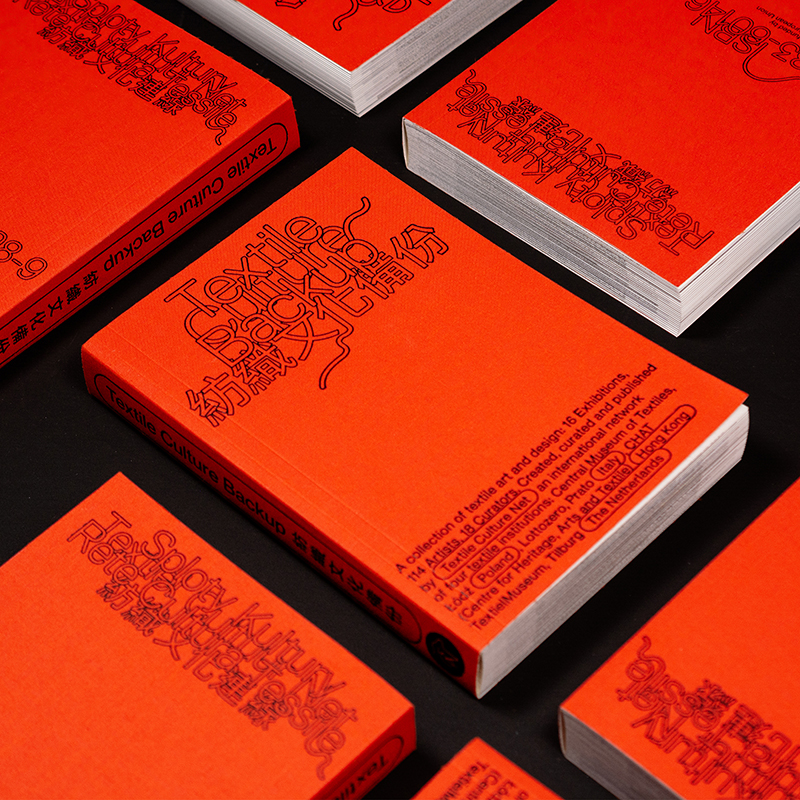
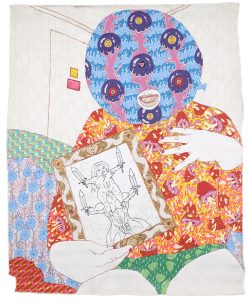
Textile Culture Backup, publication by Textile Culture Net, 2024. Design by Studio Mut. Photo by Studio Mut
There is nothing closer to our physical and social bodies than fibers. Textile Culture Net has recognized, reclaimed, and amplified that proximity through its working methodology, the balance of forces among its agents, the redistribution of curatorial power, and the articulation of artistic histories and productions that, at first glance, appear distant from one another. After interviewing Alessandra[1], director of Lottozero Kunsthalle in Prato, and curator Bukola Oyebode[2], this is how I can define Textile Culture Net.
The network emerged in 2020, in the midst of the pandemic, initiated through CHAT Centre for Heritage, Arts and Textile and articulated among textile institutions across Europe and Asia. What began as monthly meetings and digital exchanges between institutions operating without an active budget eventually became a distributed curatorial platform that developed exhibitions through Instagram and later consolidated that process in the publication Textile Culture Backup. Over the course of four years, the network organized four digital exhibitions annually through Instagram under the hashtag #TextileCultureNet, bringing together 18 curators and 114 artists from multiple geographies. What emerged was not simply a sequence of exhibitions, but an evolving transnational field of textile-based practices, political imaginaries, and material narratives. That origin matters: the project was born from the urgency of continuing to produce community and thought in the middle of the global shutdown imposed by the pandemic.
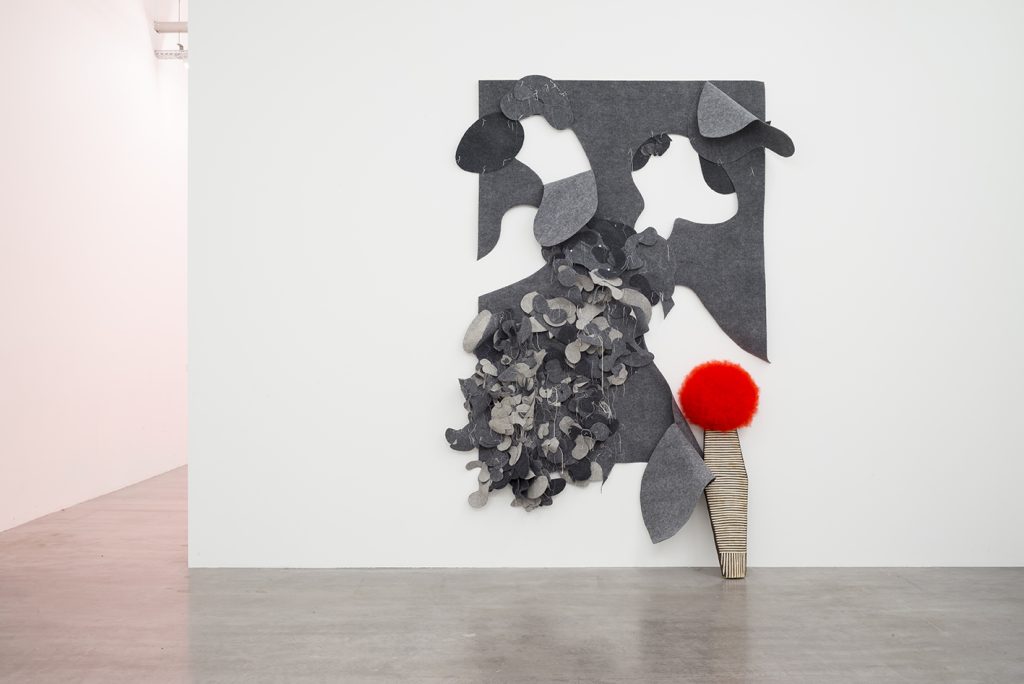
Marcia Kure, The Three Graces (triptych), 2014, acrylic wig, bolts, paint, polyester thread, rug, and wood, variable dimensions. Collection of Centre Pompidou, Paris. Courtesy of the artist/Photo: Sven Laurent. Presented in the online exhibition, another way of speaking, curated by Bukola Oyebode.
The digital format eliminated spatial restrictions. The works stopped sharing the same physical site and instead began inhabiting a common conceptual field. Relationships ceased to organize themselves through geographic proximity and started forming through discursive affinities and shared political concerns. Yet that same structure also exposed its limits: temporal fragmentation, loss of memory, and the reduction of the textile’s tactile experience.
The book emerges as the project’s critical consolidation. Conceived as a physical backup of a transient digital experience, the publication materializes a network of relations, negotiations, curatorial methodologies, and textile imaginaries that otherwise risked disappearing into the speed and fragmentation of digital circulation. It allows dispersed digital processes to be traversed simultaneously, practices to be compared, recurrences to be identified, and historical concerns to be recognized across distant geographies. In conversation with Alessandra, that political dimension appears tied to the structure of the network itself: the need to sustain a transnational project even when doing so collides with traditional systems of institutional organization and cultural funding. In conversation with Bukola, the displacement occurs elsewhere: textile understood as language, sign, and communicative medium charged with history, politics, and identity.
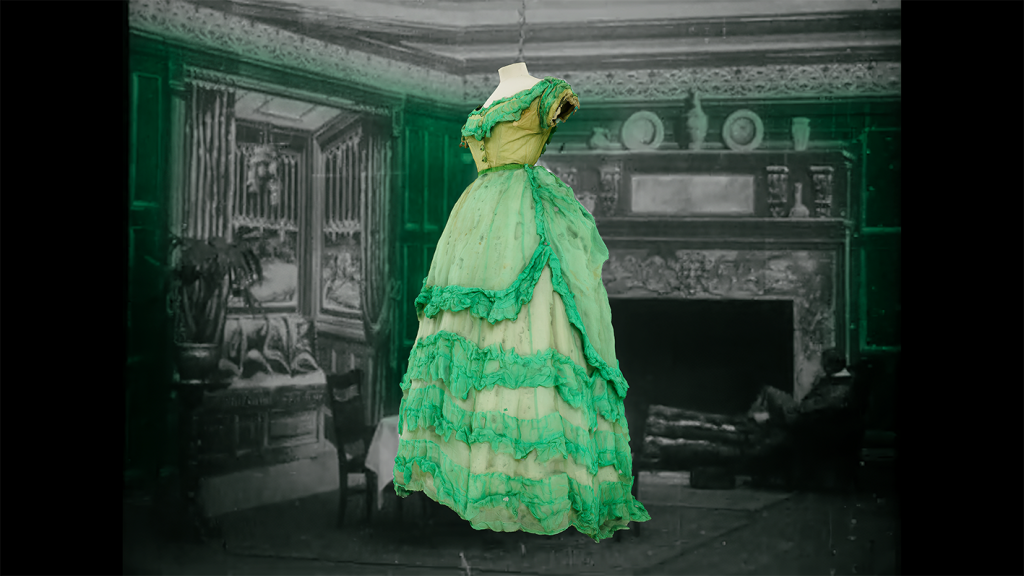
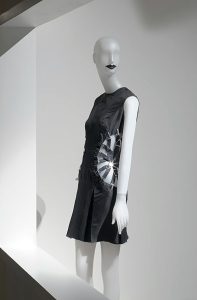
Dylan Eno, To Die For, 2022, digital, film essay, 2022. Courtesy of the artist. Historical dresses from Kunstmuseum Den Haag, with special thanks to Madelief Hohé (textile conservator), 3D model development: Provrex. Presented in the online exhibition, Skin for future beings, curated by Wumen Ghua, 2022.
Textile operates here as a structure of communal re-encounter. It closes the gap between historically separated structures of cultural power and activates connections between practices that, although they developed autonomously, can now recognize common manifestations around race, gender, class, and nationality. Textile Culture Net exceeds the model of an interinstitutional platform dedicated to textiles.
Textile Culture Net reconfigures how cultural policies, institutions, and agents within contemporary art articulate themselves. María Lugones[3] would describe this as a form of coalition-building through difference. The network neither homogenizes institutions nor erases their local and historical trajectories; it destabilizes their borders. Textile reveals itself here as embodied experience and as a situated form of knowledge production. The digital platform, the exhibitions, the physical encounters, and the book itself operate as mechanisms that reorganize how we understand cultural production and the relationship between art, material history, and politics.
What emerges is a structure rarely organized in this way: a weave of roots. Trees that once appeared isolated reveal that their roots have long been interconnected, absorbing from common territories, sharing conflicts, memories, strategies of resistance, and forms of survival. The weave, the stitch, the fiber, and the cloth operate here not as metaphors, but as political forms of artistic and cultural organization.
During our conversation, Bukola introduced a crucial point: the need to close the gap between institutions and real practices. Major cultural institutions have historically functioned as spaces of authority, validation, and control. What takes place within Textile Culture Net does not erase that structure, but it does reconfigure it. That reorganization becomes visible through its model of distributed curatorship. As Alessandra and Bukola describe it, participating institutions and invited curators worked through a shared system: one curator proposed a theme, the others responded with artists and works from their own contexts, and the resulting material was collectively reorganized into each digital exhibition. Authorship was negotiated, displaced, and shared.
Distributed curatorship does not dilute discourse; it reveals the layers of complexity and negotiation sustaining it. When institutions from Europe, Asia, and Africa articulate themselves within a shared platform, the traditional logic of organizing contemporary art enters into crisis. What is at stake is the recognition that economic, racial, social, and gendered struggles are not geographically isolated. They manifest differently, yet they share historical structures.
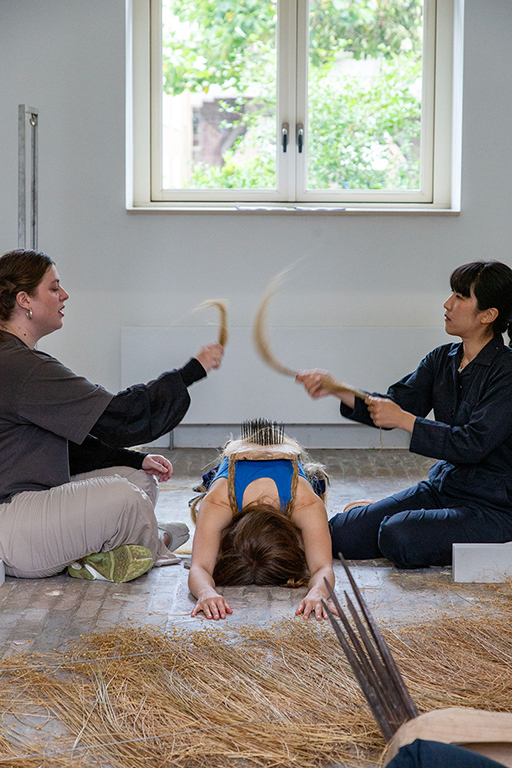
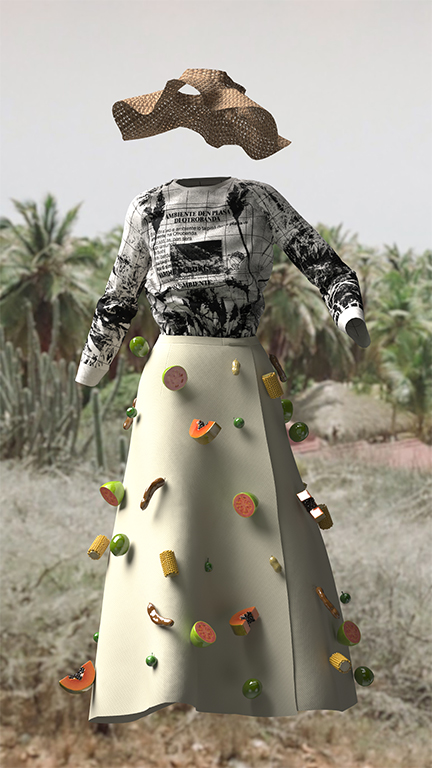
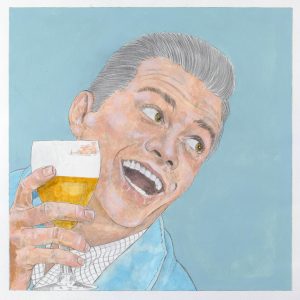
Left: Marie Ilse Bourlanges and Liza Prins, Flax, baby! Flax!, opera performance, 40’, 2024. Photo by Kyle Tryhorn. Presented in the online exhibition Future Past, curated by Laurie Peake, Textile British Biennial, 2025. / Right: Sandy Van den Brink, Fruits of Preservation, 2025, VR & Animation. Credit: Sandy Van den Brink. Presented in the online exhibition Future Past, a collaboration between Textile Culture Net and British Textile Biennial, curated by Laurie Peake, 2025.”
In 2025, I received a copy of Textile Culture Backup, a publication that includes one of my works, Cortina, within Ixchel Ledesma’s curatorial project Color of the Sacrifice, developed during the pandemic. When the book arrived, I stopped. What I held in my hands was not merely a documentary record. It was an archive capable of organizing a field of production that had long operated in dispersed ways, often without recognizing itself as a network. Another form of community emerges here: the fact that I, as a New York-based artist and critic, am included in the publication through the curatorship of Ixchel Ledesma, whom I met in Mexico City, already implies a political structure. From there, I am able to braid a conversation with Alessandra in Prato and with Bukola from another geopolitical context.
The importance of the book lies precisely there: in its capacity to gather practices working from material history and using textile as a methodology of counter-history, counter-archive, and counter-memory. Ornament and decorative surface reveal themselves here as critical devices. Through fibers, assemblages, and weavings, these works articulate human and non-human bodies, social memories, natural processes, and historical structures rendered invisible within dominant narratives.
This marks a substantial shift within the contemporary textile field. The book makes visible a network of practices that understands fibers as language, systems of signs, and spaces of political inscription. And therein lies one of its greatest achievements: connecting artists and collectives that had operated in dispersed ways while using textile as a space of representation, resistance, and social liberation.
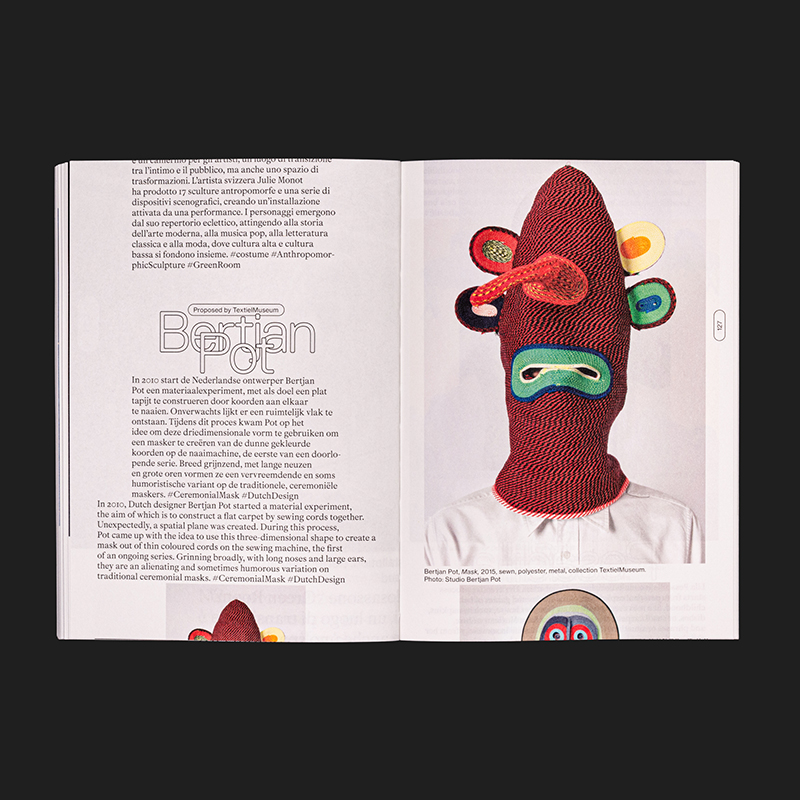
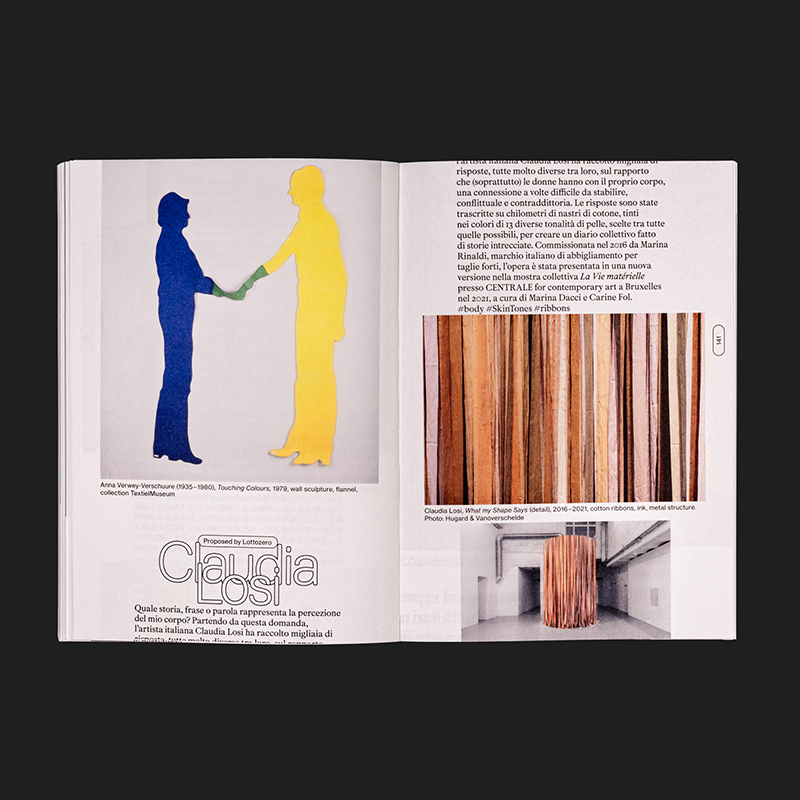
Textile Culture Backup, publication by Textile Culture Net, 2024. Design by Studio Mut. Photo by Studio Mut
The materiality of the book reinforces that conceptual operation. The quality of its editorial design, printing, and sequencing does not respond merely to aesthetic criteria. Form and content sustain the same political position. The design absorbs the project’s digital logic, displacement, sequencing, and cumulative archive and translates it into physical form without erasing its origin. This is not a conventional catalogue of digital exhibitions. The 2023–2024 edition of Textile Culture Net and the publication itself were supported through the European Union’s Creative Europe programme, revealing how experimental curatorial structures and textile-based cultural practices are beginning to enter larger institutional frameworks without fully surrendering their experimental condition. It is the documentation of methodologies, of interinstitutional and inter-agential forms of collaboration that displace the traditional meaning of the institution itself.
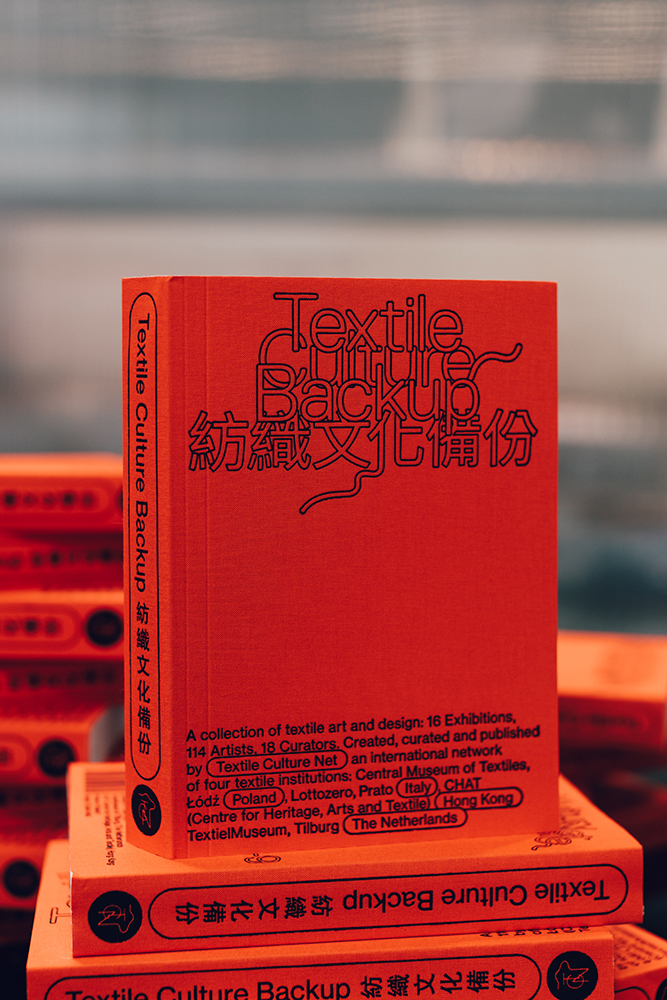
Textile Culture Backup, launch book, Lottozero, Prato, 2024. Ph. Toast Studio
Therein resides one of its greatest strengths: a project born in the digital realm, where textile materiality initially seemed displaced, manages to reincarnate that materiality within an editorial object capable of re-situating thought itself. Every work, curatorial gesture, and institution connects the local to broader macrostructural conditions.
Textile Culture Net and Textile Culture Backup force us to exceed fixed identity categories. Not to deny traditions, but to recognize that roots have always been historically interconnected, even when cultural narratives insisted on presenting them as isolated.
Alessandra Tempesti
Bukola Oyebode
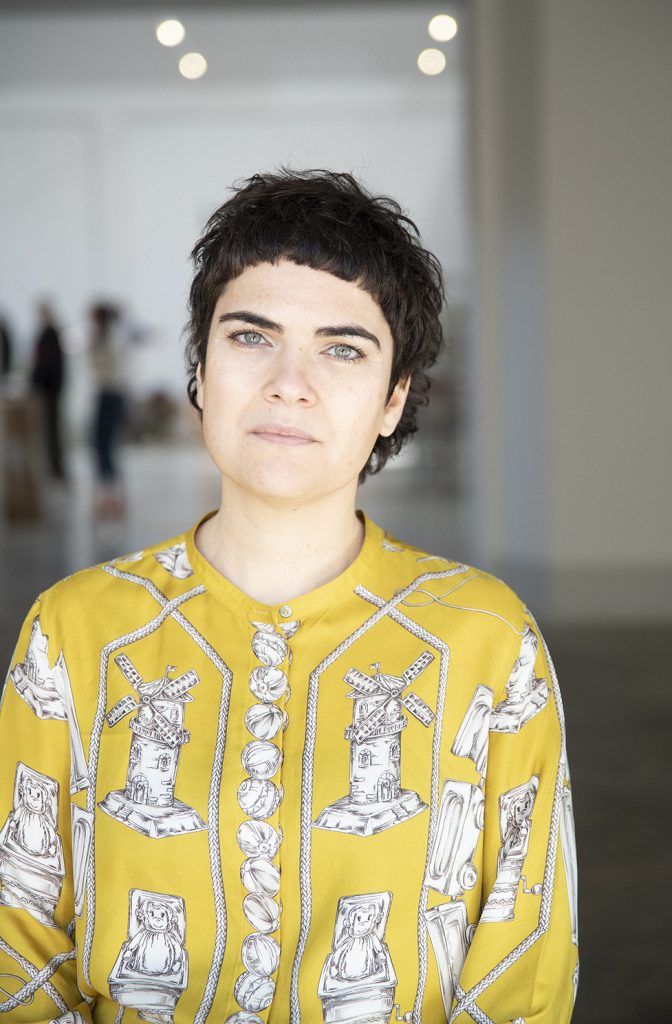
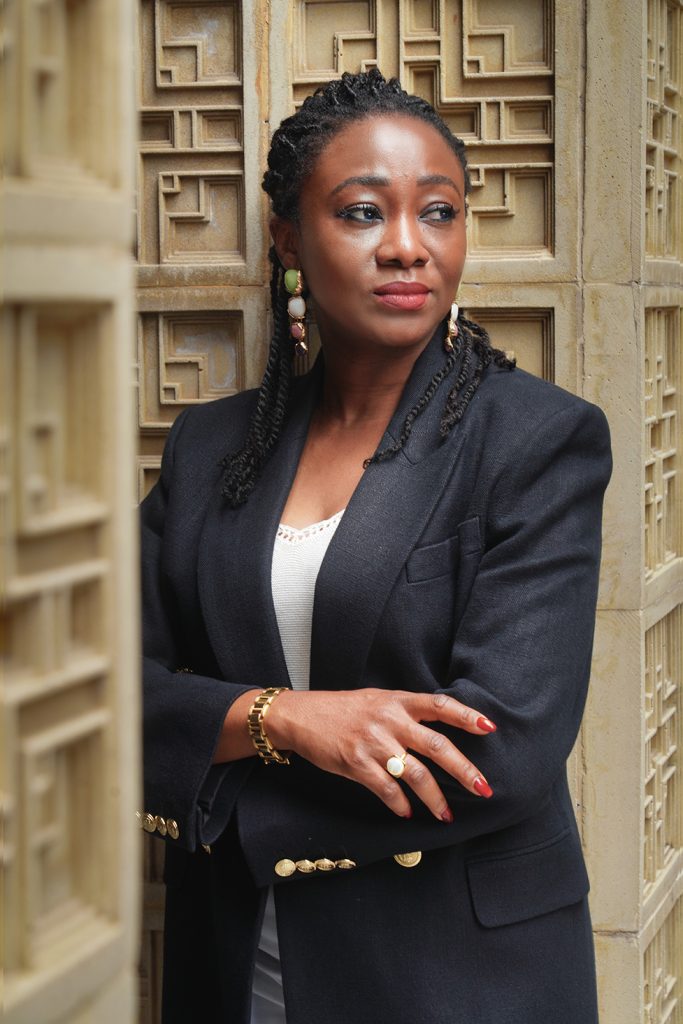
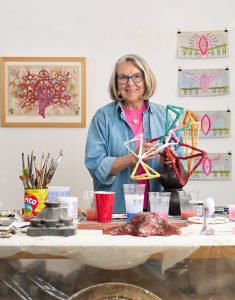
Left: Alessandra Tempesti. Photo: Rachele Salvioli. Right: Bukola Oyebode. Photo: Wain Wu
Alessandra Tempesti is an art historian, curator and sound artist based in Prato, Italy.
She is the director of Lottozero Kunsthalle, the exhibition space of Lottozero – Center for Textile Design, Art and Culture, where she brings together her background in contemporary art and textile design with her research interest in the textile medium within contemporary art.
At Lottozero Kunsthalle, she has curated several exhibitions, including solo shows by Hannes Egger, ABOUT A WORKER, Luca Vanello, Alice Ronchi, Farkhondeh Shahroudi, Daniela De Lorenzo, Chiara Bettazzi, and Barbara Prenka.
Alongside her curatorial practice, she teaches Textile Design at NABA – Nuova Accademia di Belle Arti in Rome, and History of Textiles at IED in Florence.
Bukola Oyebode is an independent arts professional from Nigeria working internationally. Her work includes writing, curating, editorial and publishing projects. She co-curated Deconstruction/Reconstruction for the 18th International Triennial of Textile in Łódź, Poland, which explores textile as a transformative force in global histories and developments. She also curated the Triennial’s collateral exhibition, Rhizomatic Portals: Ways of Knowing, featuring women artists from Africa working with textiles through multidisciplinary approaches. Other recent work includes curatorial contributions to Textile Culture Net and collaboration with The Listening Biennial/Academy to expand its programme to Lagos, Nigeria. She is currently based in Southern China.
[1] Yohanna M. Roa, interview with Alessandra Tempesti, director of Lottozero, conducted via Zoom, March 2026.
[2] Yohanna M. Roa, interview with Bukola Oyebode, conducted via Zoom, April 2026.
[3] María Lugones develops the idea of “coalition through difference” as a political practice of non-homogenizing articulation among subjects and communities shaped by historical and structural differences. See: María Lugones, Pilgrimages/Peregrinajes: Theorizing Coalition Against Multiple Oppressions (Lanham: Rowman & Littlefield, 2003).