Dominick D Lombardi in Conversation with Robert Cozzolino
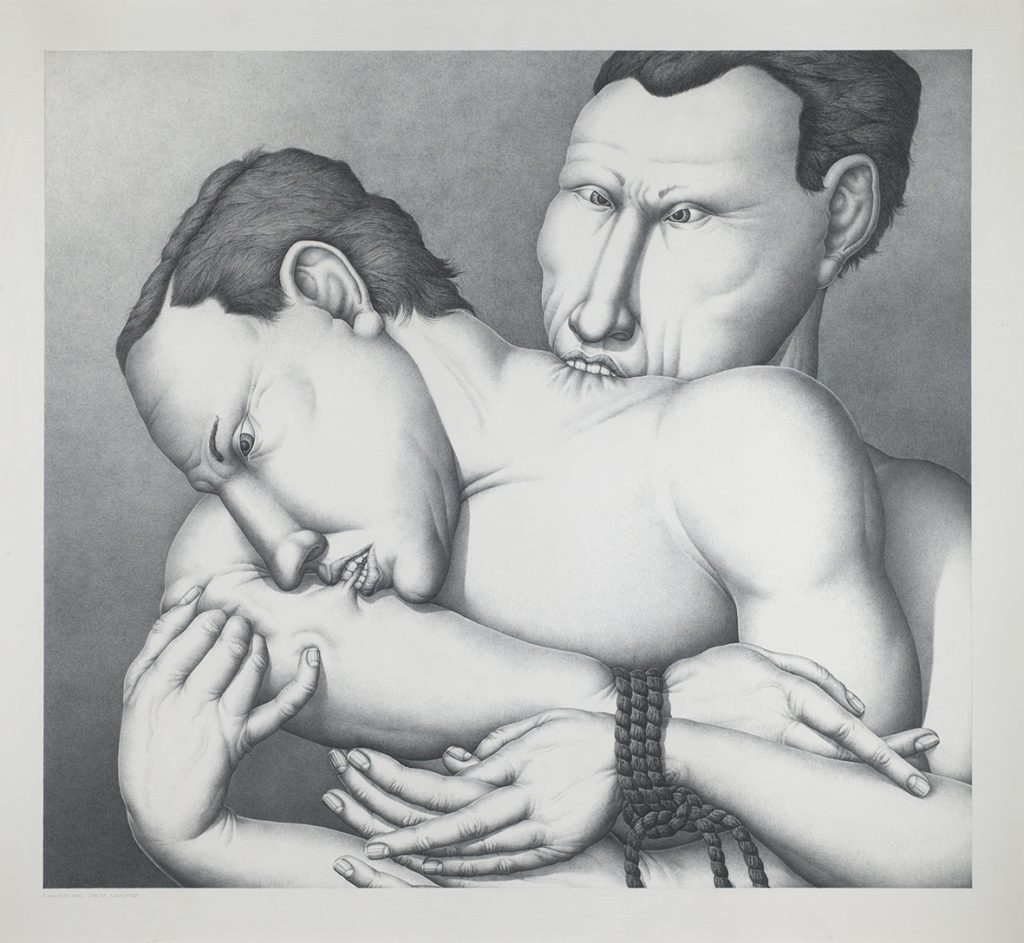
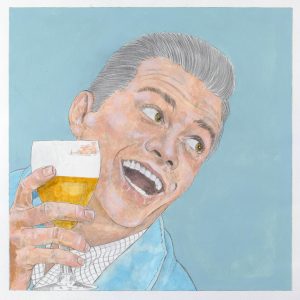
Robert Lostutter (b. 1939), A Sign of My Time, 1977. Graphite on canvas, 44 × 48 in. © Robert Lostutter. Courtesy of the artist and Corbett vs. Dempsey Gallery.
There’s a big difference between art collections based on individual impulses and aesthetics, as opposed to those focused on acquiring ‘names’ from a shopping list to impress colleagues. Early on, when Robert and Frances Coulborn Kohler began collecting, they “followed their gut,” as mentioned in the introduction essay, following “the advice of dealer Allan Frumkin, who told them to ‘buy the toughest work you can stand.’” When you peruse the 134 works of art from their collection on view at the Pennsylvania Academy of the Fine Arts (PAFA), you immediately get the feeling that the Kohlers looked toward a more eclectic, and therefore truer, representation of the human condition. Through depictions of culture and humanity in every form of daily life, ranging from celebration to desperation to intimate moments, the Kohlers embraced diversity over some homogenized state of reality.
The exhibition, “Bodies and Souls,” which includes work by Luis Cruz Azaceta, Joan Brown, Roy DeForest, Rafael Ferrer, Viola Frey, Gregory Gillespie, Juan Gonzalez, Robert Lostutter, Gladys Nilsson, Ed Paschke, and Karl Wirsum, says a lot about the diversity of the collection. The curator of this wonderful exhibition, Robert Cozzolino, has offered to answer some questions about the process of presenting the Kohler collection in a way that both represents the spirit of the Kohlers as collectors in the purest sense and offers a unique look at a period of art seen in key U.S. cities from the 1980s, a decade known for bringing back figurative painting, to the 2010s, when major museums shifted their focus toward a more diverse representation of artists – two features that define the collection.
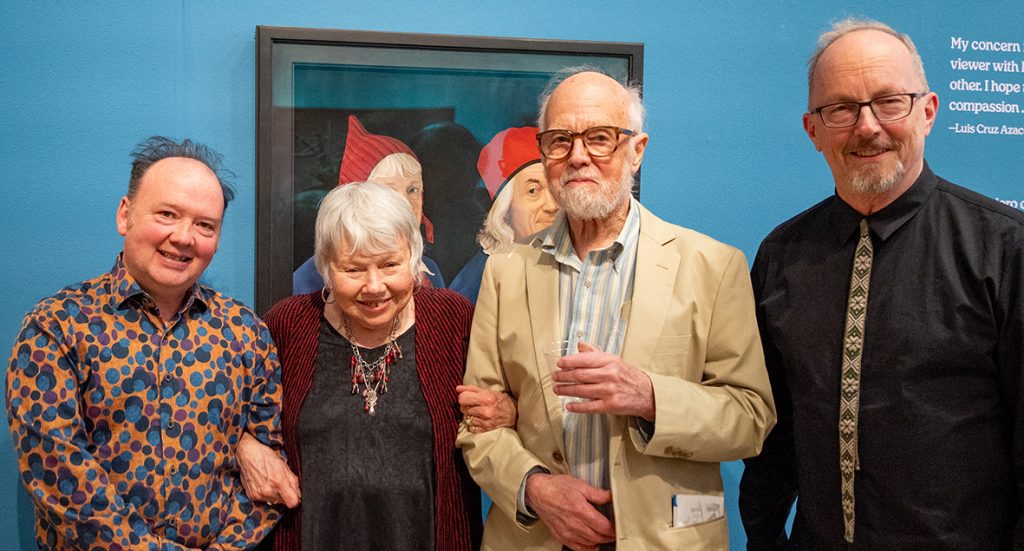
Left to right: Robert Cozzolino, Jane Lund, Robert Kohler, and Jack Kohler at the opening of Bodies and Souls, March 13, 2026, Pennsylvania Academy of the Fine Arts, Philadelphia, Pennsylvania. Courtesy of the Pennsylvania Academy of the Fine Arts. Photograph by M. Frank Burkhauser.
Dominick D. Lombardi: Robert Cozzolino, thank you for taking the time to answer questions about the curatorial process. Let’s start at the beginning. How did you meet Robert and Frances Kohler? When did you come into the picture, and what was the toughest part about curating the exhibition?
Robert Cozzolino: I met Rob and Frances in 2006. I had been at PAFA for just over a year and had just curated an exhibition called “Art in Chicago: Resisting Regionalism, Transforming Modernism,” to fill a sudden gap in the schedule. I did it in four and a half months, start to finish, using work from PAFA’s collection as the foundation. Since I grew up in Chicago, I also relied on a lot of friends, colleagues, collectors, and artists there to lend artwork in a short span of time. The dealer and writer John Corbett was one of them. When he visited Philadelphia to see the show, he brought Rob and Frances to the museum. He was surprised we hadn’t met and thought we would get on famously since our tastes overlapped. The Kohlers had been independent of museums and were quietly doing their thing without an advisor. When they saw the show, they were stunned and intrigued. I remember Rob saying, “Wow! I had no idea PAFA had this stuff – and someone who cares about it and understands it.” It was a great compliment to know that I had put together something unexpected that showed my passion for the material. They invited me over, and when I saw their collection, I was astonished. So many of my favorite artists were represented, with tough, gorgeous, unusual examples of their work. They were surprised that I recognized what I was seeing, and if I had a tail, it would have been wagging.
From that point on, we became close, visited frequently, went to New York together to see exhibitions, and shared discoveries with one another. The Kohlers loaned works to exhibitions I organized later, and they bought work for the museum by artists who had been neglected by most of the field. They were generous and modest, always doing what they did for the artists. By the time I left PAFA in 2016, they had decided to plan a bequest of their collection to the museum. We stayed in touch, and they donated some work to the Minneapolis Institute of Art, where I worked from 2016 to 2024. When it came time for PAFA and the Woodmere Art Museum to celebrate the Kohlers’ generosity, everyone agreed that I should guest curate the exhibitions. It meant a lot to be able to honor Rob and Frances this way. They have been major collectors of American and contemporary art operating under the radar – this project shows the world, and Philadelphia, how powerful and personal their collection is. What is on view at PAFA is about one-third of the collection.
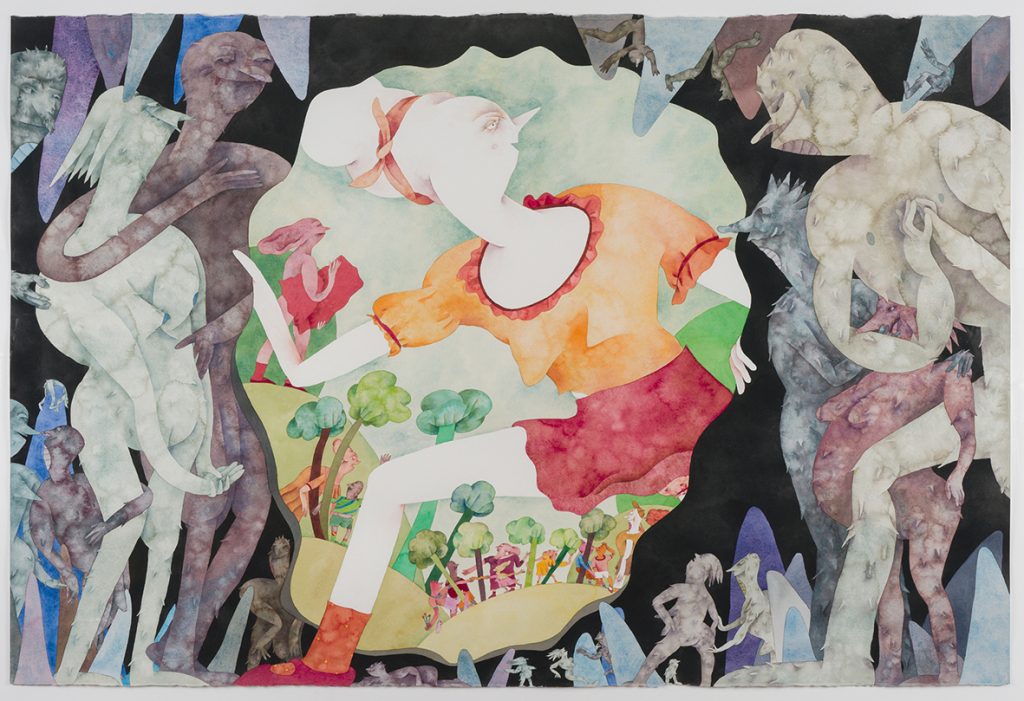
Gladys Nilsson (b. 1940), Checking Out the Other Side, 1987. Watercolor on paper, 40 × 60 in. © Gladys Nilsson. Courtesy of the artist and Garth Greenan Gallery.
DDL: I love hearing stories like yours and the Kohlers’, where things happen in person and organically, especially in these times of so much emphasis on virtual activity. What first came to mind for me when seeing examples of the collection was the impressive representation of people of color and folks in the LGBTQ community. That says a lot about the open-mindedness of the collectors. Robert Lostutter’s intriguing A Sign of My Time (1977) is a perfect example of that.
RC: I am glad you noticed that. The Kohlers did not collect with a program in mind; they simply gravitated to what moved them – in both subject matter and the manner in which images are made. If there’s a throughline among what may seem to be a disparate group of artists, I would say it is that the Kohlers chose artists who were open, honest, and vulnerable in expressing identity. It really is a collection that centers what it means to be in a body, from physical, emotional, and psychological points of view. This likely led them to artists who were unusually perceptive about how we live together, consider ourselves, and situate who we are in the world and history. Lostutter is definitely an artist who has consistently examined sexuality in its beauty, its extremes, and its connection to a dreamworld. One of the younger artists in the collection, Craig Calderwood, is trans, and they have been forthright in discussing how their work speaks to particular communities on one level while also allowing others to enter into it. They use visual cues that are understood among queer audiences and consistently work to subvert a heteronormative gaze.
I have spent a lot of time with this collection over the past twenty years and have watched it grow. The Kohlers were always curious about artists who were new to them, and we constantly shared images and explored underknown people from the past and emerging artists. But when I was working on the exhibition and catalogue, I was struck by the strong representation of artists from Cuba, Puerto Rico, and Haiti – those communities that are being demonized and targeted by the current administration. Of course, where I live, in Minneapolis, there was a brutal, militarized occupation that targeted anyone of color. The community came together to resist and reject ICE’s terrorist tactics. As I was installing the exhibition, that was still happening. Work by Azaceta, Ferrer, and Didier William is powerful at any moment, but as I stood with them in the galleries, I was overwhelmed by how much their work resonated with the moment and how much it was needed. I would say that is the hallmark of collecting to the needs of humanity.
DDL: Do you remember which particular artists first piqued your interest in the collection?
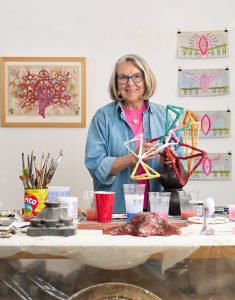
RC: What initially surprised me is that artists I had spent a lot of time thinking about or writing about were there side-by-side. People who, to me, fit together, speak to one another, but whom I had not seen displayed that way anywhere else. Gregory Gillespie and Gladys Nilsson, Red Grooms and Winfred Rembert. But the Kohlers introduced me to artists I did not yet know – Jane Lund, Deborah Kravitz, Juan Gonzalez. Artists whose technique is impeccable, magical, uncanny, and whose subjects are so personal it feels like you are seeing secrets. In turn, I introduced them to artists aligned with what they loved, like Philadelphia’s Anne Minich or John Wilde, the great Wisconsin contemporary of George Tooker and Leonora Carrington.
DDL: Did the Kohlers acquire works directly from artists where they could meet and chat, or was it mostly through galleries?
RC: The Kohlers cultivated close relationships with certain dealers whom they respected and could sense were in it for the right reasons – for the love of art and devotion to artists. The dealers, in turn, got to know this unassuming but smart couple with the uncommon eye. They got to know what a “Kohler” piece would be – and offered it to them accordingly. It has also been important to them to get to know some of the artists without forcing the relationships. They genuinely want to know what makes these creative people tick, and close friendships have formed between the Kohlers and several folks represented. They wanted the artists to know where their work wound up and to express their admiration to them. The artists I have spoken to feel seen by Rob and Frances. Several came to the opening, and it was a delight to see them with Rob and their work.
DDL: Yes, that energy at openings is palpable – seeing the various aspects of the hearts and souls (or Bodies and Souls, as noted in the exhibition’s title) of the artists, the collectors, the curator, and the administration of the institution all culminating in one common goal is pure joy. In closing, if there are one or two things you would like visitors to leave with after seeing the exhibition, what would they be?
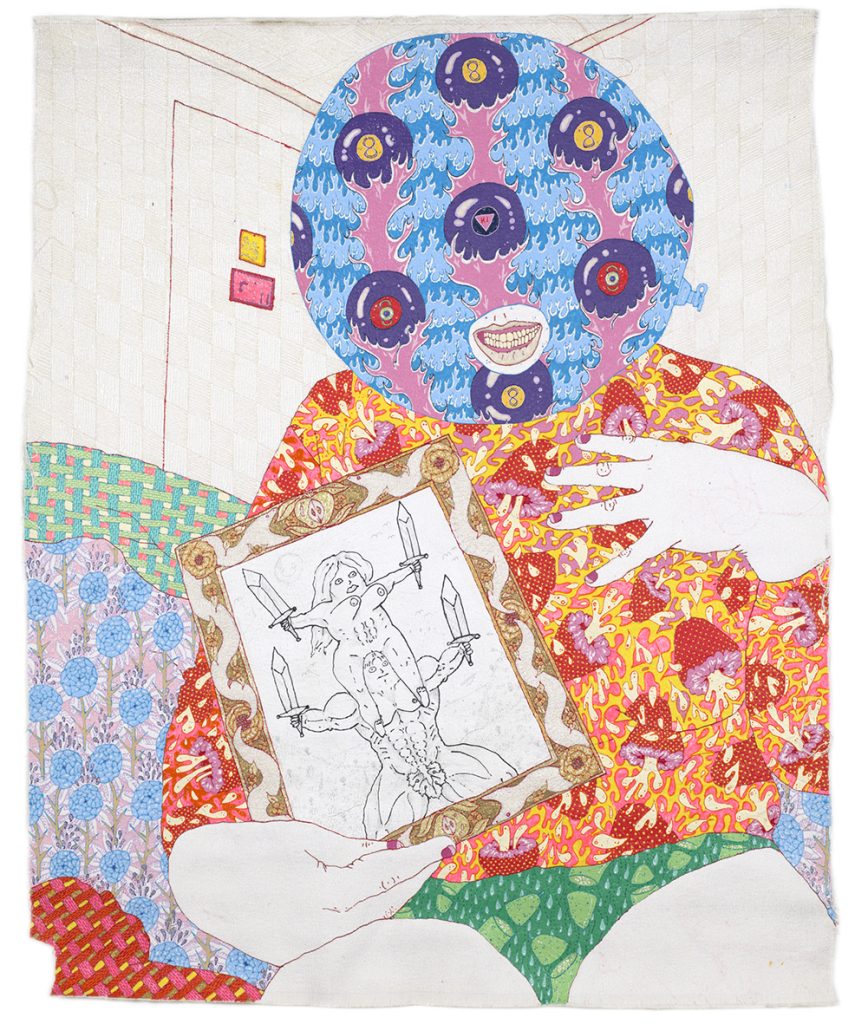
Craig Calderwood (b. 1987), Notes on and from My Eight-Year-Old Self, 2018. Paint and thread on upholstery fabric, 51 × 46 in. © Craig Calderwood. Courtesy of the artist and George Adams Gallery.
RC: Well, as you mention in your introduction, this is a regionally diverse collection. Again, without setting out to do so, the Kohlers really brought together communities of artists – networks of friends, even rivals, that reveal the interconnectedness of San Francisco, Chicago, Northampton, MA, Philadelphia, and New York. That more truthfully gets at how artists interact and show together – not in these regional silos, but as people interested in correspondences within the places they live and beyond. So Maija Peeples Bright and Gladys Nilsson are shown together; Gregory Gillespie and Anne Minich play off one another. Cross-pollination. In my essay for the catalogue, I also assert that the Kohler collection makes a strong case for the liberatory capacity of representational art, or figuration. To depict oneself and one’s community as one wishes to be represented is incredibly powerful. So many of these artists used the tools of realism to draw attention to beauty, politics, unabashed sexuality, and mortality. Figuration connects directly with audiences, but what you’ll see in the show is not traditional – it subverts earlier modes to challenge expectations of representational work. Finally – it cannot be said enough – the figure never “returns” in the 1960s or 1980s, etc., because at no time does it ever go away. It is the art world’s attention that fails or fleetingly goes elsewhere. The Kohler collection makes a strong case for the fluidity of meaning that the human form brings to every generation.
Bodies and Souls, which features the collection formed by Philadelphians Robert and Frances Coulborn Kohler, will be on display through July 12, 2026, at the Pennsylvania Academy of the Fine Arts in the Samuel M.V. Hamilton Building in Philadelphia, Pennsylvania. The exhibition is curated by Robert Cozzolino. The coordinating curator at PAFA is Michelle Donnelly, Evelyn and Will Kaplan Curator of Twentieth-Century Art and the John Rhoden Collection. For more information, please visit PAFA Bodies Souls
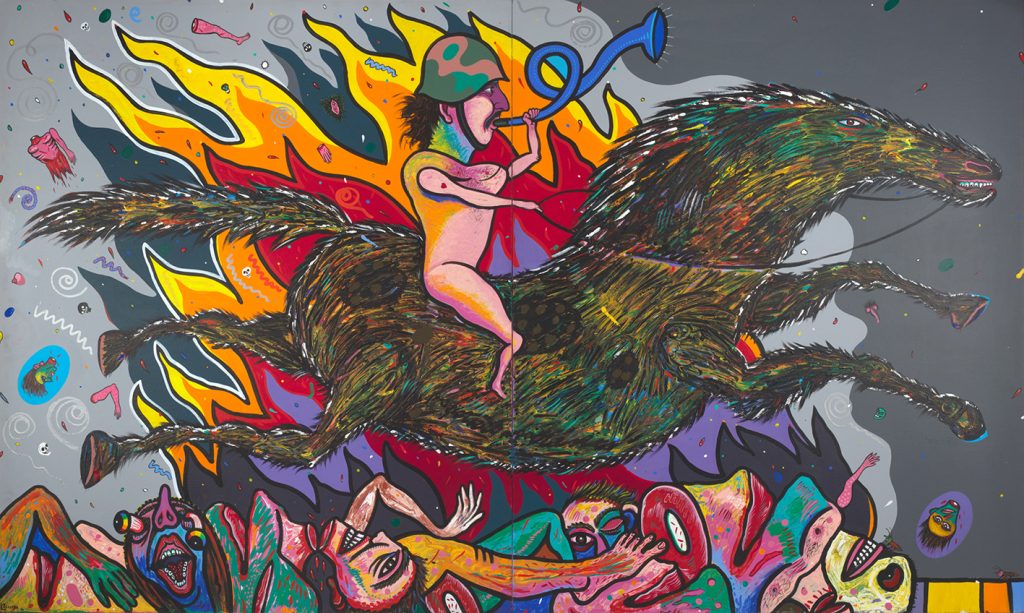
Luis Cruz Azaceta (b. 1943), Self-Portrait: Apocalypse Now—or Later?, 1981. Acrylic on canvas, 72 × 120 in. © Courtesy of the artist.